


Thursday, 15/10/2026 | 01:50
News
Government Issues Decree Detailing the Law on Energy Efficiency and Conservation
15:16 - 23/01/2026

On 21 January 2026, the Government promulgated Decree No. 30/2026/NĐ-CP, detailing a number of articles and measures for organizing and guiding the implementation of the Law on Using Energy Efficiency and Conservation.
The Decree provides detailed regulations on Article 44, Clause 1 of Article 45, and Article 48 of the Law on Using Energy Efficiency and Conservation No. 50/2010/QH12; and Clauses 11, 18, 19, and 20 of Article 1 of the Law amending and supplementing a number of articles of the Law on Energy Efficiency and Conservation No. 77/2025/QH15.
Measures for organizing and guiding the implementation of the Law on Using Energy Efficiency and Conservation and its amended law include: management and supervision of energy use; designated energy users; energy audit organizations; energy-efficient and effective use in agencies and units using state budget funds; energy labeling for energy-using vehicles, equipment, and construction materials; the Energy Efficiency Promotion Fund; energy service organizations and measures to promote energy efficiency and conservation; inspection and examination of energy efficiency and conservation activities.
The Decree applies to agencies, organizations, households, and individuals engaged in production, business, transportation, and energy use activities in Vietnam.
Strengthening State Management in Energy Efficiency and Conservation
The Decree clearly defines designated energy users as follows: industrial and agricultural production facilities and transport units with total annual energy consumption equivalent to 1,000 tons of oil equivalent (1,000 TOE) or more; and buildings used as headquarters, offices, residential buildings, educational and medical facilities, entertainment and sports facilities, hotels, supermarkets, restaurants, and shops with total annual energy consumption equivalent to 500 tons of oil equivalent (500 TOE) or more.
Provincial-level People’s Committees are responsible for approving and issuing the list of designated energy users in their localities once a year before 31 March and consolidating and submitting it to the Ministry of Industry and Trade. Designated energy users are responsible for developing annual and five-year plans for energy efficiency and conservation.
Conditions for energy audit organizations include being legally established in accordance with law; possessing operational capacity that meets energy audit requirements appropriate to the audited entities; having measuring instruments, equipment, and tools (or long-term leasing contracts), as well as measurement procedures suitable for the audited fields (electricity, heat, steam, compressed air, lighting) and compliant with current regulations; having procedures for management, operation, and maintenance of measuring instruments; and ensuring the accuracy of measuring equipment.
Annually, energy audit organizations must organize training and competency assessment for energy auditors. The Ministry of Industry and Trade is the authority responsible for receiving dossiers and publishing the list of energy audit organizations on its official portal. Energy audit organizations are responsible for ensuring safety during audits and for submitting annual periodic reports to the Ministry of Industry and Trade before 31 January of the following year.
Regarding the management of energy-using vehicles, equipment, and construction materials, the Decree specifies that the Ministry of Industry and Trade and the Ministry of Construction, within their assigned functions and tasks, shall determine energy efficiency levels, energy consumption levels, and thermal characteristics for comparative labels and certification labels based on energy performance indices, energy consumption levels, and thermal properties. The Ministry of Industry and Trade guides and organizes the receipt of dossiers for energy labeling declarations for vehicles and equipment. The Ministry of Construction guides and organizes the receipt of dossiers for energy labeling declarations for transport vehicles and construction materials.
Manufacturers and importers of energy-using vehicles, equipment, and construction materials subject to mandatory energy labeling are required to submit annual reports to the provincial-level People’s Committees where their production facilities or business registrations are located. Provincial-level People’s Committees shall assign specialized management agencies to receive and consolidate reports from manufacturers and importers of energy-using vehicles, equipment, and construction materials subject to mandatory energy labeling within their localities, and submit consolidated reports to the Ministry of Industry and Trade and the Ministry of Construction before 31 March of the following year.
Annually, manufacturing facilities and importing enterprises that have declared energy labeling for vehicles, equipment, and construction materials are required to compile statistics on the quantity and categories of labeled vehicles, equipment, and materials released to the market during the year and submit reports to the relevant line ministries before 1 March of the following year. The Ministry of Industry and Trade and the Ministry of Construction shall lead and organize inspections of testing activities for energy labeling at testing laboratories. Provincial-level People’s Committees shall lead, in coordination with relevant agencies, periodic or ad hoc inspections of energy labeling activities for labeled vehicles, equipment, and construction materials circulating on the market, including those traded on e-commerce platforms.
Encouraging the Promotion of Energy Efficiency and Conservation
The Decree encourages facilities not classified as designated energy users to periodically conduct energy audits and report on their energy use. State management agencies for energy efficiency and conservation are responsible for providing guidance and support to these facilities in conducting energy audits and reporting on energy use in a manner similar to that applied to designated energy users.
Investment projects involving expansion, upgrading, renovation, or conversion to energy-efficient and effective technologies that reduce greenhouse gas emissions; projects investing in and converting to the production of energy-efficient, low-emission products; and digital transformation projects in agricultural production and processing that promote innovation in energy efficiency and conservation may be considered for inclusion or adjustment in the list of green-classified investment projects.
Energy service organizations are entitled to incentives and support from the State, support from the Energy Efficiency Promotion Fund, and support from the National Program on Energy Efficiency and Conservation.
Energy-using facilities that enter into voluntary agreements on energy efficiency and conservation with state management agencies or state-managed or authorized energy suppliers are entitled to incentives and support under the National Program on Energy Efficiency and Conservation and other state incentives and support mechanisms.
The State prioritizes training and capacity building for human resources of energy service organizations and encourages these organizations to participate in training, capacity building, and education on energy efficiency and conservation.
The Decree specifically stipulates funding sources for the Energy Efficiency Promotion Fund, including: charter capital allocated from the state budget sourced from public investment in accordance with current regulations; capital formed from non-refundable grants, aid, and voluntary contributions from domestic and foreign organizations and individuals for the field of energy efficiency and conservation; additional capital from the Fund’s operational results in accordance with regulations; and other equity capital sources as prescribed by law. The Fund may mobilize capital from domestic and foreign financial and credit institutions in accordance with law, ensuring compatibility with the Fund’s repayment capacity, and receive entrusted investment capital from domestic and foreign organizations and individuals for energy efficiency and conservation. The Prime Minister shall decide on the establishment, organization, operation, financial mechanisms, and charter capital of the Energy Efficiency Promotion Fund.
Ministries, sectors, and provincial-level People’s Committees shall organize dissemination and communication through mass media to raise public awareness and encourage community participation in energy efficiency and conservation.
The Decree stipulates that the Ministry of Industry and Trade is responsible to the Government for state management of energy efficiency and conservation in accordance with the tasks assigned in the Law on Using Energy Efficiency and Conservation; and shall coordinate with ministries, sectors, and provincial-level People’s Committees to supervise, inspect, and urge the implementation of the Law and this Decree, and to submit annual reports to the Prime Minister; as well as to commend and propose commendations for organizations and individuals with outstanding achievements in energy efficiency and conservation management.
Decree No. 30/2026/NĐ-CP takes effect from the date of signing and replaces Decree No. 21/2011/NĐ-CP dated 29 March 2011 of the Government on detailing and guiding the implementation of the Law on Using Energy Efficiency and Conservation.
Energy management certificates issued before the effective date of this Decree remain valid until 31 December 2030.
Full text of Decree No. 30/2026/NĐ-CP: HERE (Vietnamese version).


More
-
-
-
 Energy Efficiency and Conservation in the Chemical Industry
15:34 - 21/09/2026
-
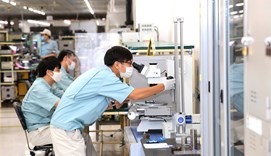 Enhancing Production Efficiency Through Energy Optimization
10:38 - 15/09/2026
-
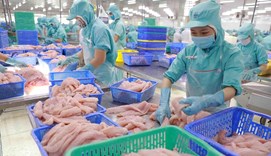 Improving Energy Efficiency in Seafood Processing Industrial Sector
14:25 - 09/09/2026
-
LATEST NEWS
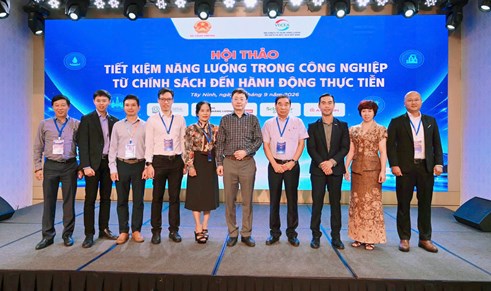

EVENTS
-
 27/10/2025
WEBINAR 3 - ESCO Model, A key to promote energy efficiency and conservation
-
06/10/2025
WEBINAR 2 - Financial Support Industrial Enterprises in Energy Efficiency - Opportunities and Challenges
-
22/09/2025
WEBINAR 1 - Scaling Up Energy Efficiency in Vietnam


