


Thursday, 15/10/2026 | 01:51
News
Hanoi Implements the 2026 Plan on Energy Efficiency and Conservation
15:52 - 20/01/2026

The People’s Committee of Hanoi has issued a plan to implement the National Program on Energy Efficiency and Conservation and electricity demand management across the city in 2026.
The People’s Committee of Hanoi has issued a plan to implement the National Program on Energy Efficiency and Conservation and electricity demand management across the city in 2026. The plan aims to ensure energy security, reduce pressure on the power system during peak periods, and contribute to environmental protection and sustainable growth.
Under the plan, Hanoi will continue to comprehensively deploy energy efficiency and conservation measures across all sectors, including production, business, services, and residential life. Priority will be given to improving electricity demand-side management and reducing peak load capacity of the city’s power system, particularly during peak hot months and the dry season.
The city targets overall energy savings of 1.6%–1.8% compared to forecast demand, including a minimum saving of 2.2% of total electricity consumption for each electricity-consuming sector, namely: industry; trade and services; construction; management and residential consumption; agriculture, forestry, fishery; and other activities.
Key energy-consuming facilities with annual electricity consumption of 1 million kWh or more are required to save at least 3% of their electricity consumption each year.
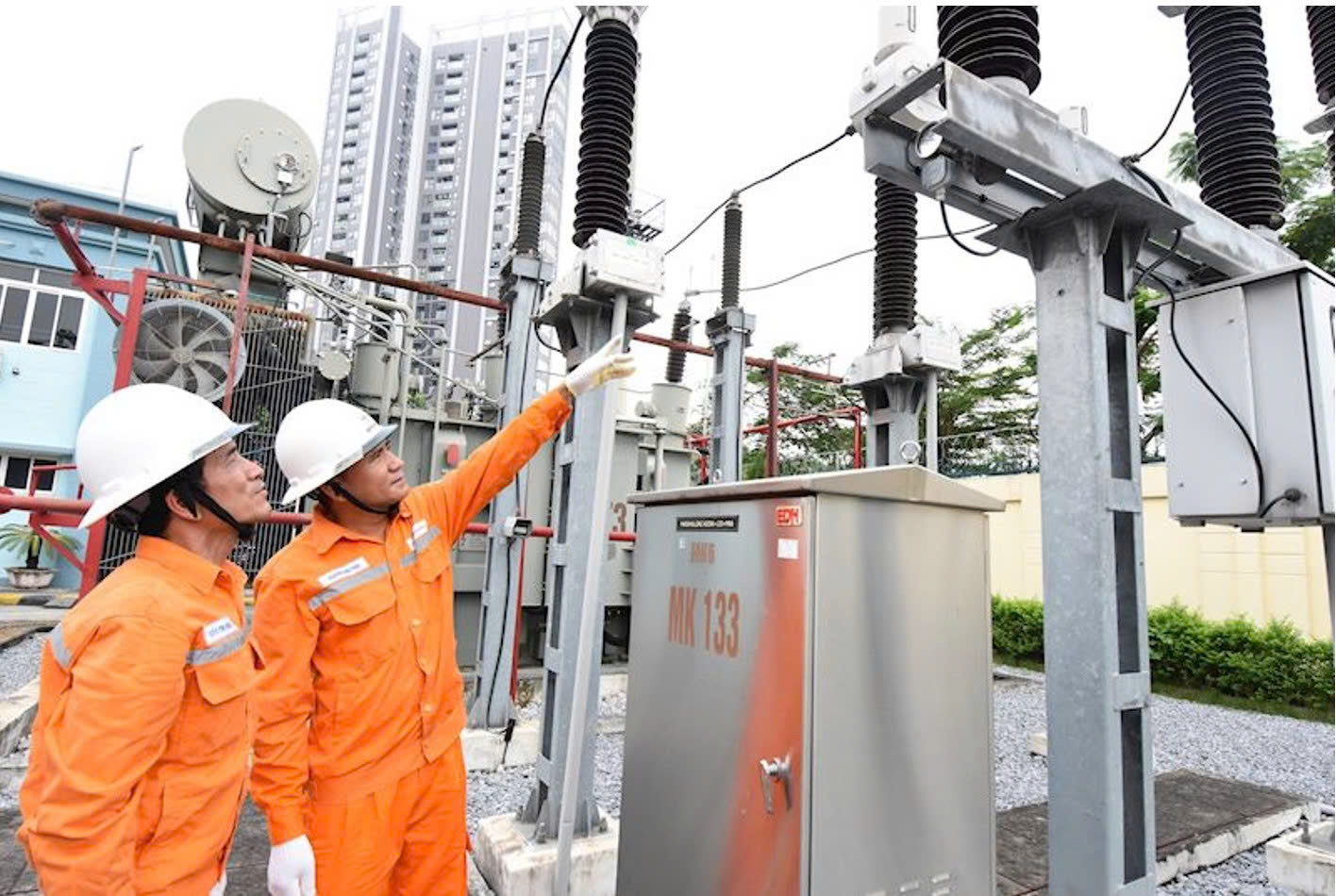
Hanoi continues to promote the application of science and technology in energy management (Photo: EVNHANOI).
In the lighting sector, the city sets a target for public lighting systems, decorative lighting, and outdoor advertising lighting to save at least 30% of electricity consumption, while traffic lighting must save at least 10%. In addition, 100% of newly installed public lighting systems are required to apply energy-saving solutions.
According to the plan, in 2026, Hanoi will continue implementing the movement “Households Using Electricity Safely and Efficiently,” aiming to recognize 1,260 exemplary households at the city level and 6,300 exemplary households at the ward and commune level. The city will also organize 10–20 workshops to promote skills in using energy-efficient appliances among households.
Hanoi further targets that 70% of schools will conduct communication and teaching activities on energy efficiency and conservation. The city will continue to promote the application of science and technology in energy management, pilot energy storage systems (BESS), enhance electricity load forecasting capacity, and support enterprises in technological innovation and production line upgrades toward energy efficiency and green transition.
The Hanoi People’s Committee assigns the Department of Industry and Trade as the lead agency, coordinating with relevant departments, sectors, the Hanoi Power Corporation, and local authorities to implement the plan, inspect and supervise compliance, and ensure that energy efficiency and conservation measures are effectively implemented, contributing to stable energy security and the sustainable socio-economic development of the Capital.
According to the Hanoi Department of Industry and Trade, during the 2021–2025 period, the city achieved total energy savings of 705.7 kTOE, equivalent to 8.26% of total energy demand, exceeding the target by 1.26%. This is an impressive result, given that Hanoi accounts for more than 10% of the country’s total electricity consumption. Hanoi has established a comprehensive and unified system for managing and operating energy efficiency programs. Plans, guidelines, and support mechanisms for enterprises and households have been issued promptly, helping all segments of society clearly understand their responsibilities and proactively seek and apply appropriate energy-saving solutions. The energy-saving movement has spread from factories to households. One hundred percent of administrative offices have implemented the “Green Office – Energy-Saving” model, while in schools, hundreds of thousands of students are taught about energy efficiency and conservation as part of the curriculum. At the same time, Hanoi has conducted energy audits at nearly 200 key energy-consuming facilities, helping enterprises identify thousands of inefficiency points and subsequently improve technology, replace equipment, and reduce electricity costs by 5–20% annually. In public lighting, hundreds of thousands of outdated sodium lamps have been replaced with energy-saving LED lights combined with automated control systems, saving tens of millions of kWh each year. Hanoi also places strong emphasis on communication and raising public awareness. Campaigns such as Earth Hour, “Energy Saving for a Green Future,” and “Energy-Saving Households” are organized regularly and attract broad public participation. During Earth Hour 2025 alone, Hanoi saved more than 204,000 kWh of electricity in one hour—equivalent to the daily electricity consumption of over 5,000 households. |


More
-

-

-
 Energy Efficiency and Conservation in the Chemical Industry
15:34 - 21/09/2026
-
 Enhancing Production Efficiency Through Energy Optimization
10:38 - 15/09/2026
-
 Improving Energy Efficiency in Seafood Processing Industrial Sector
14:25 - 09/09/2026
-
LATEST NEWS


EVENTS
-
 27/10/2025
WEBINAR 3 - ESCO Model, A key to promote energy efficiency and conservation
-
06/10/2025
WEBINAR 2 - Financial Support Industrial Enterprises in Energy Efficiency - Opportunities and Challenges
-
22/09/2025
WEBINAR 1 - Scaling Up Energy Efficiency in Vietnam


