Viglacera: Applying Energy Efficiency into Households and Industrial Zones (Part 2)
While energy efficiency at the factory level begins with technological innovation and improvements to production processes, in real estate projects it is reflected in building design, material selection, equipment use, and operational management. For Viglacera Corporation, its dual role as a building materials manufacturer and real estate developer provides an opportunity to apply its own products in actual projects, combining materials with technical systems to improve energy performance.
Integrating Energy Efficiency Solutions into Buildings
To date, Viglacera has invested in and put into operation 18 residential and urban developments, one five-star resort, and 19 industrial parks in Vietnam and abroad. These projects have been developed with a green orientation, with energy and resource efficiency becoming increasingly important requirements in the investment process. Pasted markdown.
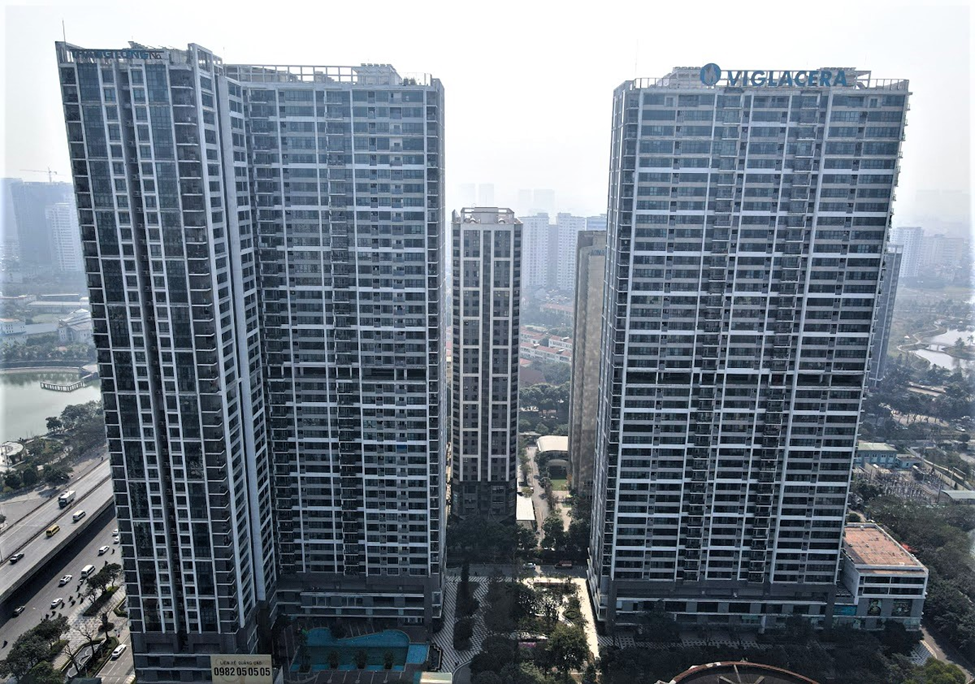
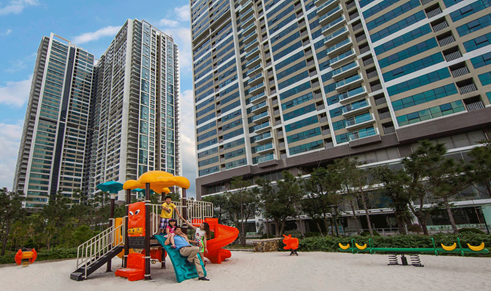
The modern appearance of the Thang Long Number One luxury apartment complex.
Developed 17 years ago, when green building certifications such as LOTUS and EDGE were not yet widely adopted in Vietnam, the Thang Long Number One luxury apartment complex was recognized early on as Hanoi’s first green building.
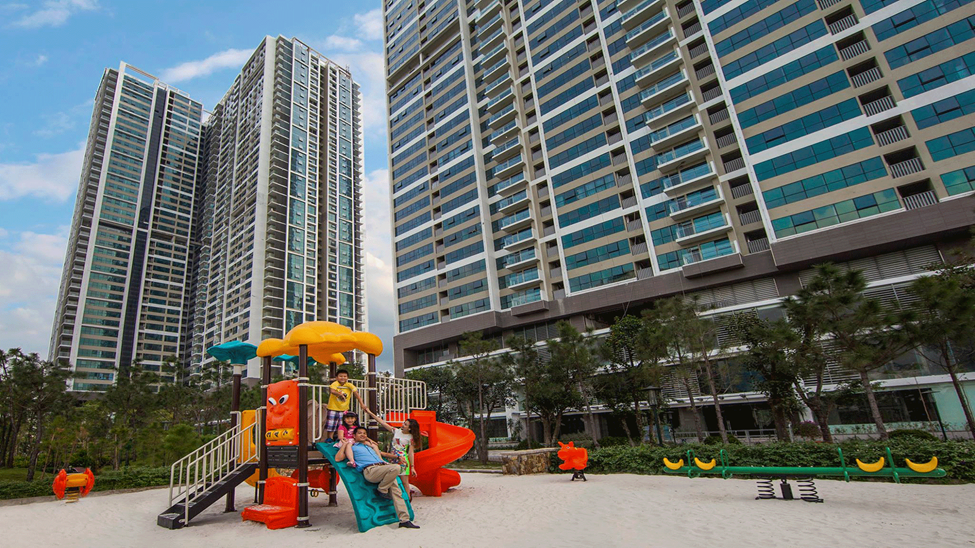
The project was developed on a site of approximately 4,000 m² with a building density of 37%, enabling apartments to make greater use of natural daylight. Greenery surrounding the buildings also contributes to creating a cool and open living environment within the city.
Thang Long Number One’s energy efficiency is achieved through the combination of building design, materials, and technical systems. To support its modern glass-façade architecture, Viglacera used insulated glazing units combined with Low-E glass to reduce solar heat radiation.
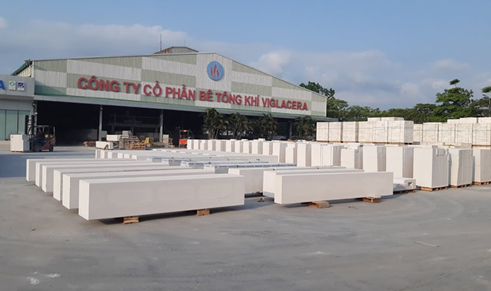
Energy-efficient glass, together with environmentally friendly, sound-insulating, thermally insulating, and lightweight materials such as autoclaved aerated concrete blocks, forms a building envelope capable of limiting heat transfer. By reducing the amount of heat entering the building, demand for air conditioning can also be reduced. The resulting energy efficiency is reflected in the building’s actual electricity consumption during operation.
Thang Long Number One also incorporates an intelligent Building Management System (BMS), integrating the control and monitoring of mechanical and electrical systems, including air conditioning, ventilation, exhaust systems, water supply, fire protection, lighting, energy management, and smart elevators. This system provides a platform for centralized management of the building’s technical equipment.
Thang Long Number One was awarded the “Green Building” certification by the Ministry of Construction, making it the first building in Vietnam to receive this recognition.
It was also the first high-rise residential complex to supply solar-heated water to individual apartments. The use of solar energy for hot water reduces demand for conventional energy sources.
Thang Long Number One was awarded the “Green Building” certification by the Ministry of Construction, making it the first building in Vietnam to receive this recognition. The building was also designed to withstand earthquakes of up to magnitude 8 and received the “Safe Home” title at the Asia-Pacific International Property Awards.
These solutions demonstrate that energy efficiency should be incorporated from the design stage rather than achieved simply by adding equipment after construction has been completed. Combining appropriate materials, control systems, and energy sources helps improve operational efficiency while meeting requirements for safety and quality of life.
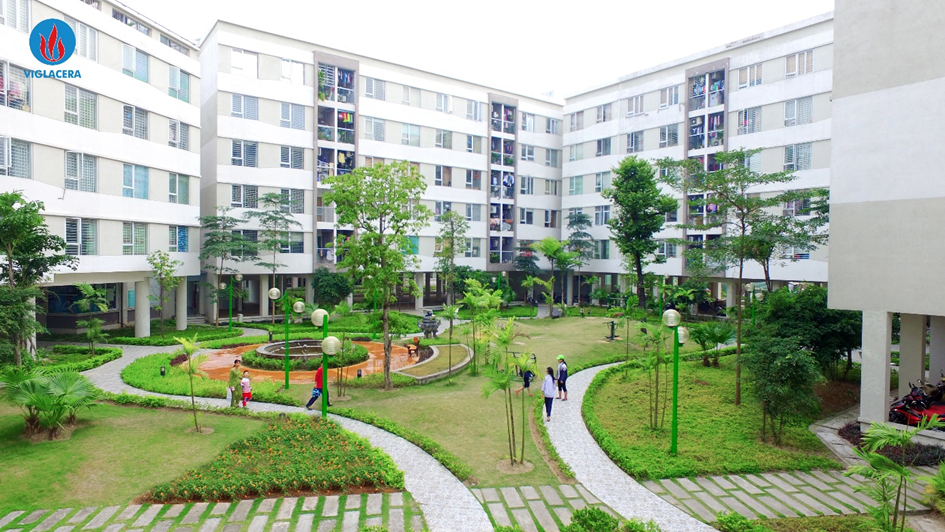
Viglacera has adopted a similar approach in its social housing developments. At the Dang Xa Urban Area in Hanoi, social and commercial housing are planned as an integrated development, allowing residents to share green spaces, water features, and public amenities.
Viglacera developed up to 3,500 social housing units at Dang Xa, with advertised selling prices of less than VND 9 million per square meter and quality comparable to commercial housing. The availability of cleared land, together with the use of Viglacera-manufactured materials such as autoclaved aerated concrete blocks, tiles, glass, and sanitary ware, provides greater flexibility in material selection and investment cost control.
Lightweight materials help reduce structural costs; thermal insulation materials reduce cooling demand; and water-efficient sanitary equipment lowers domestic water consumption. When integrated from the design stage, these solutions contribute to greater resource efficiency and lower operating costs.
The Dang Xa II Social Housing Project received the “Vietnam Green Architecture Award” from the Vietnam Association of Architects.
Dang Xa Urban Area includes a system of public schools from kindergarten and primary school through lower secondary school, enabling children to walk to school along green internal roads. For residents, the benefits of the model extend beyond housing prices to include environmental quality, access to amenities, and lower long-term living costs.
The Dang Xa II Social Housing Project received the “Vietnam Green Architecture Award” from the Vietnam Association of Architects for its environmentally friendly design and energy-efficient operation.
Building on this model, Viglacera continued to develop worker housing in Yen Phong, Bac Ninh, with more than 1,500 units; Dong Van, Ha Nam, with more than 2,000 units; CT3 Kim Chung social housing with nearly 1,000 units; and Tien Duong 1 in Hanoi with nearly 3,500 apartments.
Across Viglacera’s projects, the total number of social housing units exceeds 18,000, including nearly 7,000 worker housing units. These developments emphasize landscaping and green spaces and incorporate environmentally friendly building materials manufactured and supplied by the company.
In the resort segment, Angsana Quan Lan Halong Bay Hotel and Resort is Quang Ninh Province’s first international five-star island resort and the first tourism and resort project developed by Viglacera.
Given the island location and constraints on freshwater and electricity supply, Viglacera decided to develop the project comprehensively in accordance with green building criteria, with a strong emphasis on energy efficiency and efficient resource use.
Angsana Quan Lan is Quang Ninh Province’s first international five-star island resort and Viglacera’s first tourism and resort development.
According to Mr. Nguyen The Chinh, Deputy General Director of Viglacera Corporation – JSC, the project uses LED lighting for 100% of its lighting system. The swimming pool canopy is decorated with bamboo, a locally available material in Vietnam, while all other wooden items are made from engineered wood.
The air-conditioning system is supported by a water-cooled chiller. Excess cooling energy from the air-conditioning systems serving large spaces such as conference halls and restaurants is recovered, filtered again, and redirected to cool technical rooms. The domestic hot water system uses heat pumps.
Recovering excess cooling energy demonstrates the importance of technical system management in improving energy efficiency rather than allowing usable energy to go to waste. Together with LED lighting, heat pumps, and appropriate materials, these measures aim to improve overall energy efficiency within the development.
For water management, Viglacera has invested in a wastewater collection system that directs wastewater to a centralized treatment plant for reuse in landscape irrigation and road cleaning, thereby reducing freshwater demand for purposes where appropriately treated water can be used.
The Angsana Quan Lan project has received EDGE green building certification from the International Finance Corporation (IFC), a member of the World Bank Group. Through the project, Viglacera aims to combine business efficiency with environmental conservation and sustainable tourism development in Quang Ninh.
Green Industrial Parks: From Technology to Management
While energy efficiency in residential and resort developments is reflected in design, materials, and operating equipment, industrial parks require a broader approach encompassing infrastructure management, emission control, and large-scale resource efficiency.
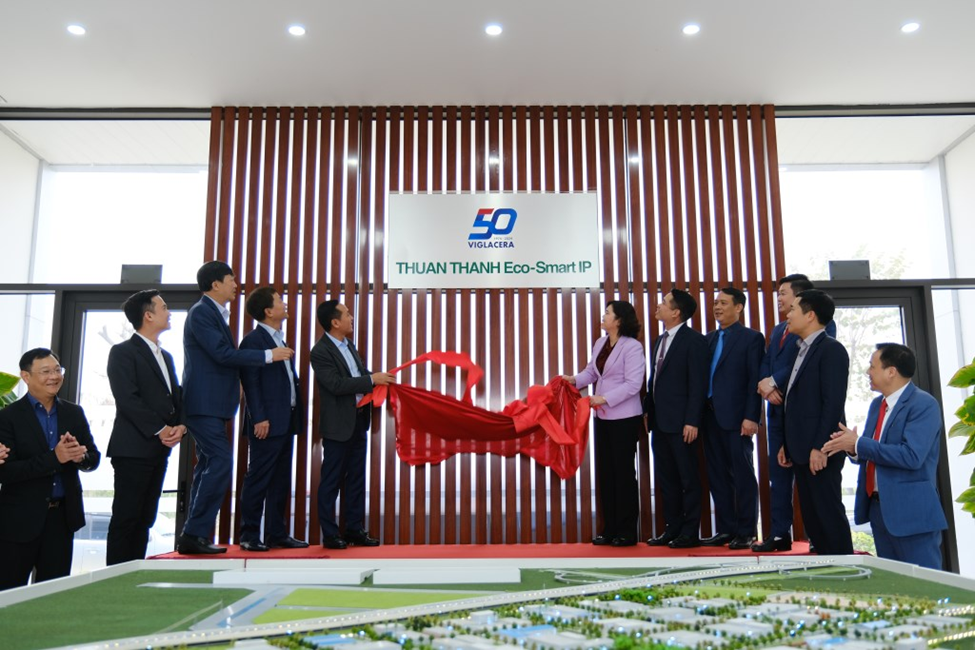
Viglacera announces the development of Thuan Thanh Eco-Smart IP as a green and smart industrial park.
Since entering the industrial park real estate sector in 1998, Viglacera has developed 19 industrial parks in Vietnam and abroad, covering more than 6,000 hectares and attracting approximately 400 investors worldwide with total investment capital of around USD 20 billion.
In early 2024, Viglacera announced the development of the 262-hectare Thuan Thanh Eco-Smart IP under a green and smart industrial park model. The objective is to reduce environmental impacts, improve service quality, and create favorable conditions for investors.
According to Mr. Tran Anh Tuan, Director of the Construction Investment Project Management Department at a Viglacera Corporation branch, the company is focusing on four groups of solutions.
The first group focuses on energy efficiency through smart lighting systems and greater use of renewable energy.
The second group focuses on emission control, water supply management, automated irrigation, and rainwater reuse. Viglacera aims to reuse 5–25% of treated wastewater for landscape irrigation, meet approximately 40–100% of road-cleaning water demand, and reduce non-hazardous sludge by around 406 kg per day, equivalent to 40% of total sludge generated.
The third group focuses on greening industrial parks with tree species capable of high CO₂ absorption, targeting the absorption of more than 2,000 tonnes of CO₂ annually during the initial years—equivalent to the annual emissions of nearly 500 gasoline-powered cars.
The fourth group focuses on digital transformation, with integrated software-based management at the operations center, a shared-data management system, and a one-stop consulting center.
These solutions aim to reduce raw material and fuel consumption, conserve water, improve energy efficiency, and control environmental impacts. For existing industrial parks, Viglacera is gradually upgrading and transforming infrastructure, while new industrial parks are being designed according to green and smart models from the outset.
By 2030, the company plans to invest in new industrial parks in high-potential locations such as Bac Ninh, Phu Tho, Quang Ninh, Thai Nguyen, Hung Yen, and Lang Son, adding approximately 2,000–3,000 hectares in total.
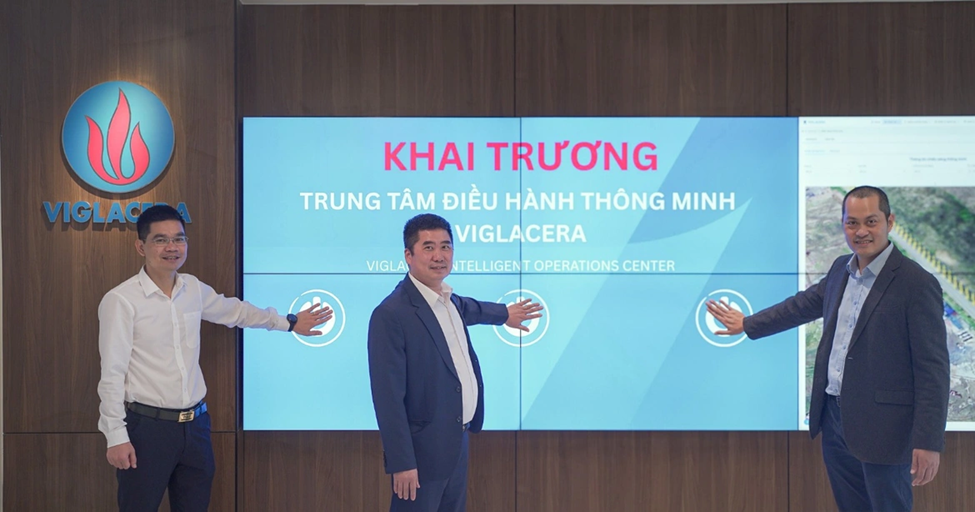
Viglacera puts its Intelligent Operations Center into operation.
In early 2026, Viglacera put the IOC Viglacera Intelligent Operations Center into operation to coordinate information and support the implementation of technological, environmental, and safety solutions across the industrial parks developed and operated by the company.
The center monitors technical infrastructure, environmental, security, and safety indicators online, while supporting management decision-making through real-time data analysis.
According to Mr. Bui Le Cao Ke, Deputy General Director of Viglacera Corporation – JSC, green industrial park standards focus on reducing emissions and air pollutants while promoting the use of green and clean energy. IOC Viglacera helps optimize business and operational management while creating a safe, transparent, and environmentally friendly investment environment.
For infrastructure developers, centralized technology-based management provides a foundation for monitoring activities and controlling operational indicators. For enterprises leasing land and factory space, infrastructure quality and environmental services are important considerations when selecting production locations, particularly as green and smart manufacturing become increasingly important.
Viglacera expects its industrial park greening strategy to help the company capitalize on the ongoing shift in global manufacturing and attract major international companies planning to invest in factories and production facilities in Vietnam. This represents a significant long-term economic benefit, as energy-efficient infrastructure and effective management can enhance the attractiveness of industrial parks to investors.
Connecting Building Materials and Real Estate to Reduce Emissions
According to Mr. Nguyen Quoc Huy, Director of the Communications Department at Viglacera Corporation – JSC, green development based on the Environmental, Social and Governance (ESG) model has become an overarching strategic direction across Viglacera’s two core business areas: building material production and real estate.
Viglacera incorporates its own green building materials into the projects it develops, contributing to their transformation into green buildings.
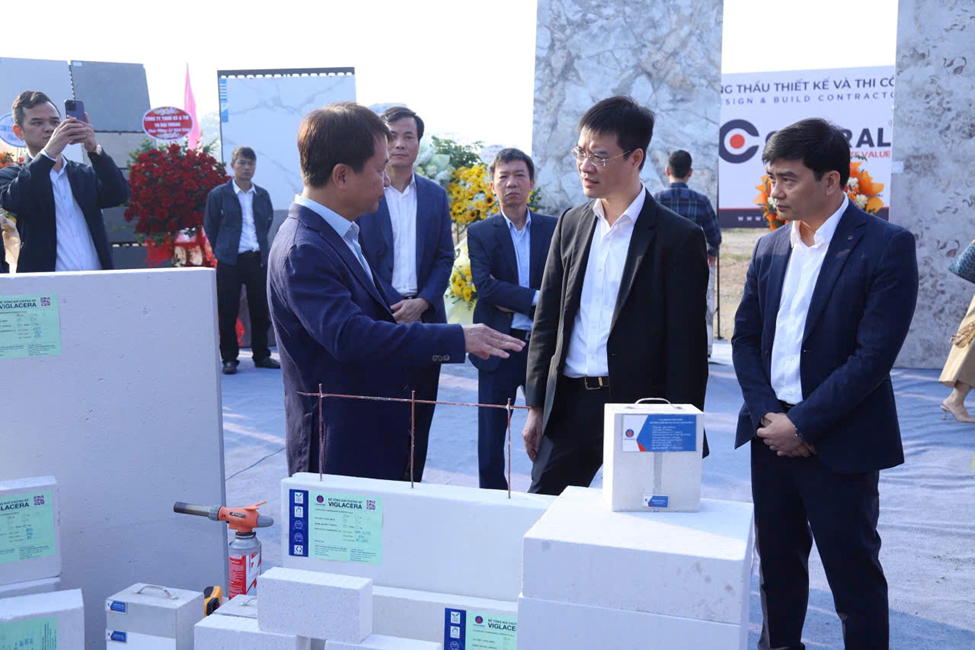
Using the company’s own materials in its real estate projects creates a connection between solutions at the factory and building levels. Energy-efficient glass, AAC/ALC autoclaved aerated concrete, water-efficient sanitary equipment, and high-tech building materials can help reduce energy and resource demand throughout the building life cycle.
In real estate, the company continues to pursue investment in integrated technical infrastructure and centralized wastewater treatment systems, while promoting clean energy and developing urban areas, worker housing, social housing, and green industrial parks.
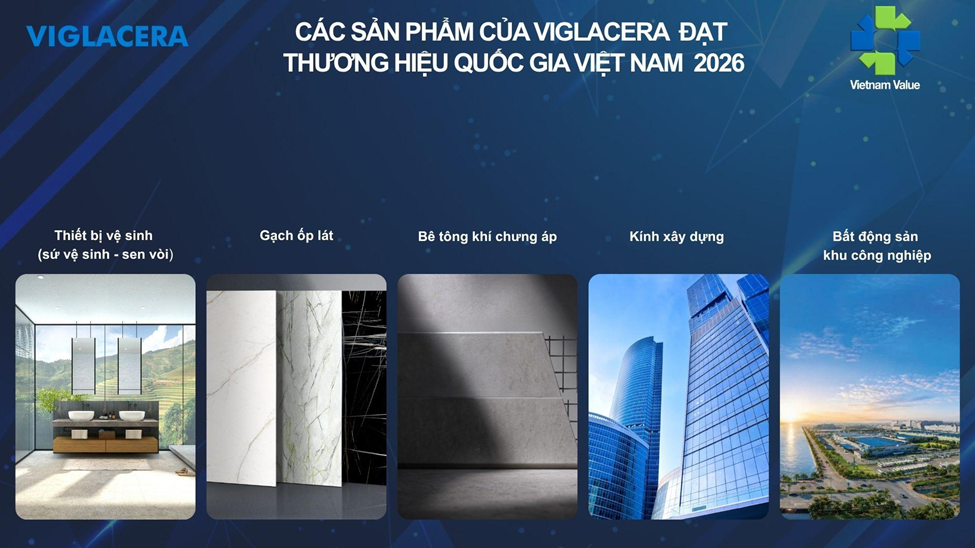
In June 2026, Viglacera was recognized in three categories: “Top 10 ESG Enterprises in the Building Materials Sector,” “Top 10 ESG Enterprises in the Real Estate Sector,” and “Top 10 Green Industrial Parks in Vietnam.” In September 2026, the company’s products were recognized as Vietnam National Brand products for the eighth consecutive year.
Viglacera’s products were recognized as Vietnam National Brand products in 2026.
These recognitions are associated with the company’s investments in technology, development of new materials, and expansion of projects in line with its green development strategy. However, energy efficiency performance must continue to be assessed through specific production and operational results, including electricity consumption, energy costs, the volume of water reused, and the amount of emissions reduced.
From a business perspective, investment in energy efficiency solutions contributes to more efficient resource use, lower costs in optimized processes, and stronger competitiveness. For developers, contractors, and residents, the benefits include lower construction and operating costs, improved living environments, and more efficient resource use. For industrial parks, green infrastructure and smart management provide a foundation for improving service quality and enhancing their ability to attract investment.
More broadly, the development of energy-efficient materials in conjunction with green buildings and industrial parks helps reduce pressure on natural resources, limit emissions, and advance the green transformation of the construction industry.
By continuing to invest in technology, expand its green building materials ecosystem, and improve the management efficiency of its real estate projects, Viglacera is gradually making energy efficiency an integral part of its corporate development strategy. This approach also contributes to the Government of Vietnam’s efforts to fulfill its COP26 commitment to achieve net-zero emissions by 2050.




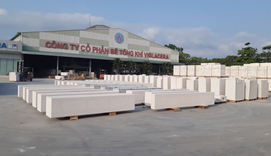 Viglacera: Energy Efficiency from Factories to Buildings (Part 1)
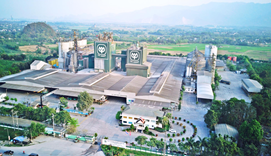 Energy Efficiency Becomes a Driver of Improved Production Performance
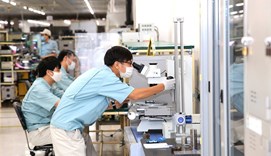 Enhancing Production Efficiency Through Energy Optimization
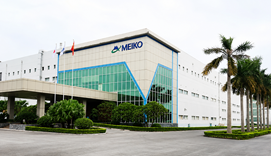
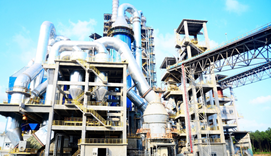 Dong Lam Cement Promotes Energy Efficiency to Enhance Sustainable Production
 27/10/2025


