The construction industry is one of the world’s major energy-consuming and greenhouse gas-emitting sectors, including in Vietnam. Within the industry, building material production is particularly energy-intensive, creating an urgent need for technological innovation, efficient resource use, and emission reductions. Pasted markdown
Technological Innovation to Reduce Energy Consumption in Production
Recognizing this need, since the 2010s, many Vietnamese building material manufacturers, including Viglacera Corporation, have begun developing green and environmentally friendly building materials. Rather than focusing solely on product functionality and cost, the company has gradually invested in material solutions that help reduce energy consumption during production, construction, and building operation.
Viglacera began its green transformation with autoclaved aerated concrete products.
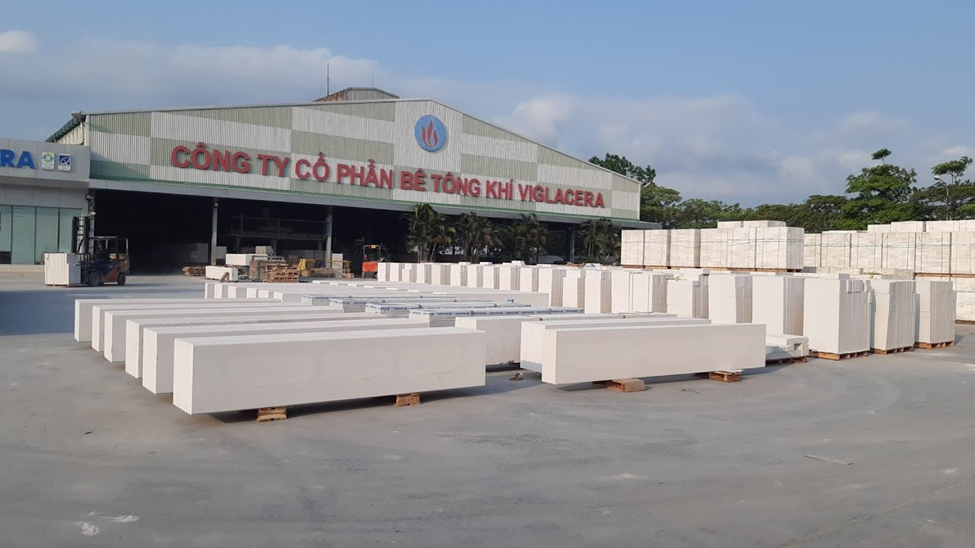
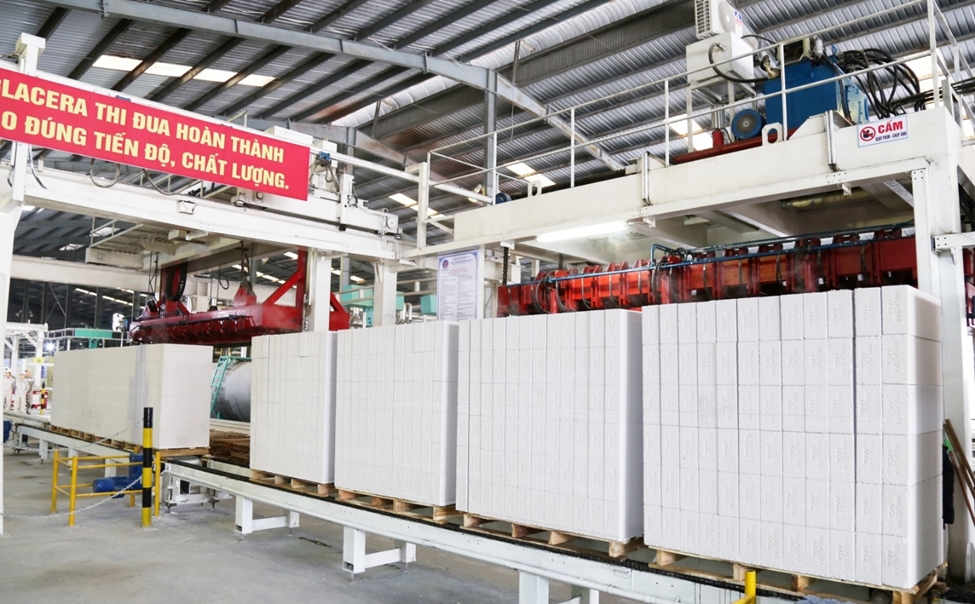
One of the first milestones in Viglacera’s green transformation was its investment in an autoclaved aerated concrete plant at Yen Phong Industrial Park, Bac Ninh, in 2010. The plant has a reported capacity of 200,000 m³ per year, equivalent to 130 million standard-sized bricks annually, and uses a modern, highly automated production line requiring relatively little labor.
Autoclaved aerated concrete (AAC) blocks were developed as an alternative to traditional fired clay bricks. As AAC does not require the conventional brick-firing process, it reduces fuel demand at this stage, thereby contributing to lower resource consumption and emissions. The production process is designed to promote the circular use of raw materials and fuels while consuming less energy and fewer resources.
The product is lightweight and provides good sound and thermal insulation, reducing building loads and delivering benefits in terms of structural costs and operational efficiency. This investment approach is particularly significant as the building materials industry must simultaneously address production costs, energy efficiency, and emission reduction requirements.
However, when AAC first entered the market, it faced numerous challenges because users were not yet accustomed to the new material, while relevant techno-economic norms and regulations had not been fully established. Viglacera worked with competent authorities to study and improve policies on non-fired building materials while gradually helping the market become familiar with the new technology.
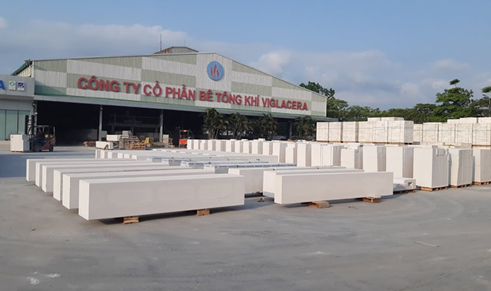
Viglacera’s modern autoclaved aerated concrete block production line.
The company published construction manuals, organized technical training for contractors, and expanded its distribution, sales, and communication networks. To help develop the market, Viglacera pioneered the use of AAC in its own projects, including the Dang Xa Urban Area and the Thang Long Number One luxury apartment complex. This approach enabled the product to demonstrate its performance in actual projects and helped build confidence among users and contractors.
Building on this foundation, in 2018, Viglacera invested in a production line for reinforced autoclaved lightweight concrete (ALC) panels using advanced technology from Germany.
According to Mr. Nguyen Quoc Huy, Director of the Communications Department at Viglacera Corporation, AAC blocks have a density of 450–750 kg/m³, equivalent to only one-third to one-quarter that of conventional concrete blocks. The use of AAC reduces building loads and can lower structural costs by 10–15% compared with traditional masonry bricks.
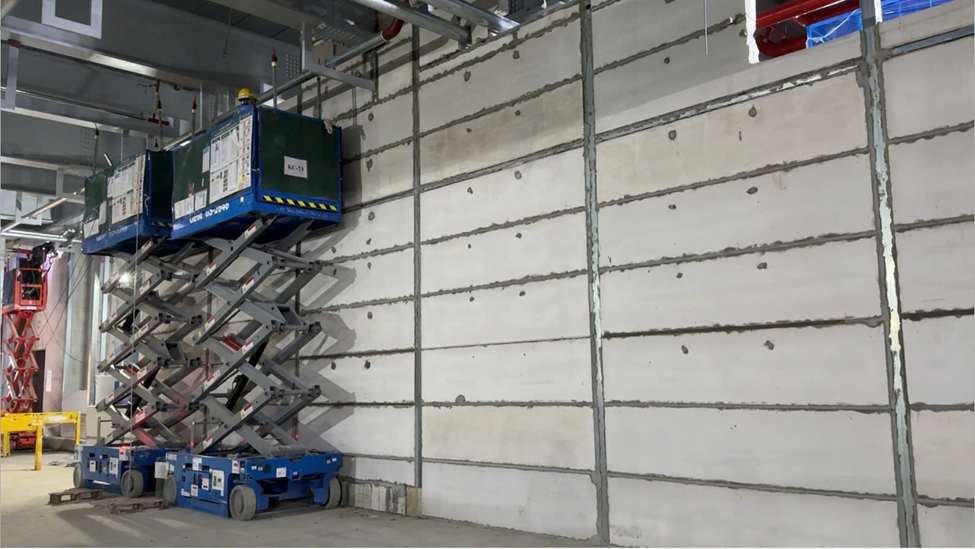
ALC panels retain the lightweight characteristics of AAC while providing high compressive strength, impact resistance, flexural strength, and load-bearing capacity. Their large dimensions and flexible lengths also facilitate construction.
The benefits of lightweight materials extend beyond the production stage. When used in buildings, AAC and ALC reduce structural loads and foundation costs, while their flat surfaces and high dimensional accuracy reduce the amount of masonry and plastering mortar required. Large-format panels also facilitate mechanization, accelerate construction, and reduce labor, equipment, and project management costs.
In particular, the materials’ thermal insulation properties help keep buildings cooler in summer and warmer in winter, thereby reducing energy demand for cooling and heating. The benefits of technological investment therefore extend from production to construction and throughout building operation.
ALC panels are increasingly favored by the market for use in modern buildings.
According to Mr. Nguyen Quoc Huy, amid labor shortages in the construction industry and rising labor and construction sand costs, AAC and ALC products can increase labor productivity by approximately two to three times compared with conventional materials. The combined cost of materials and labor is also lower than that of traditional red-brick construction.
Growing market demand is providing further impetus for the company to expand production. According to Mr. Huy, Viglacera’s autoclaved aerated concrete plant in Bac Ninh is currently unable to meet demand. The company is increasing its production capacity from 150,000 m³ to 250,000 m³ per year while preparing to invest in an additional plant in southern Vietnam to serve the regional market.
The development of AAC and ALC demonstrates that the benefits of technological innovation are measured not only by production output, but also by the ability to reduce construction costs, increase labor productivity, and lower energy demand during building operation.
Expanding Green and Energy-Efficient Building Materials
Alongside autoclaved aerated concrete, energy-efficient glass represents another important area of Viglacera’s investment aimed at reducing energy consumption during building operation.
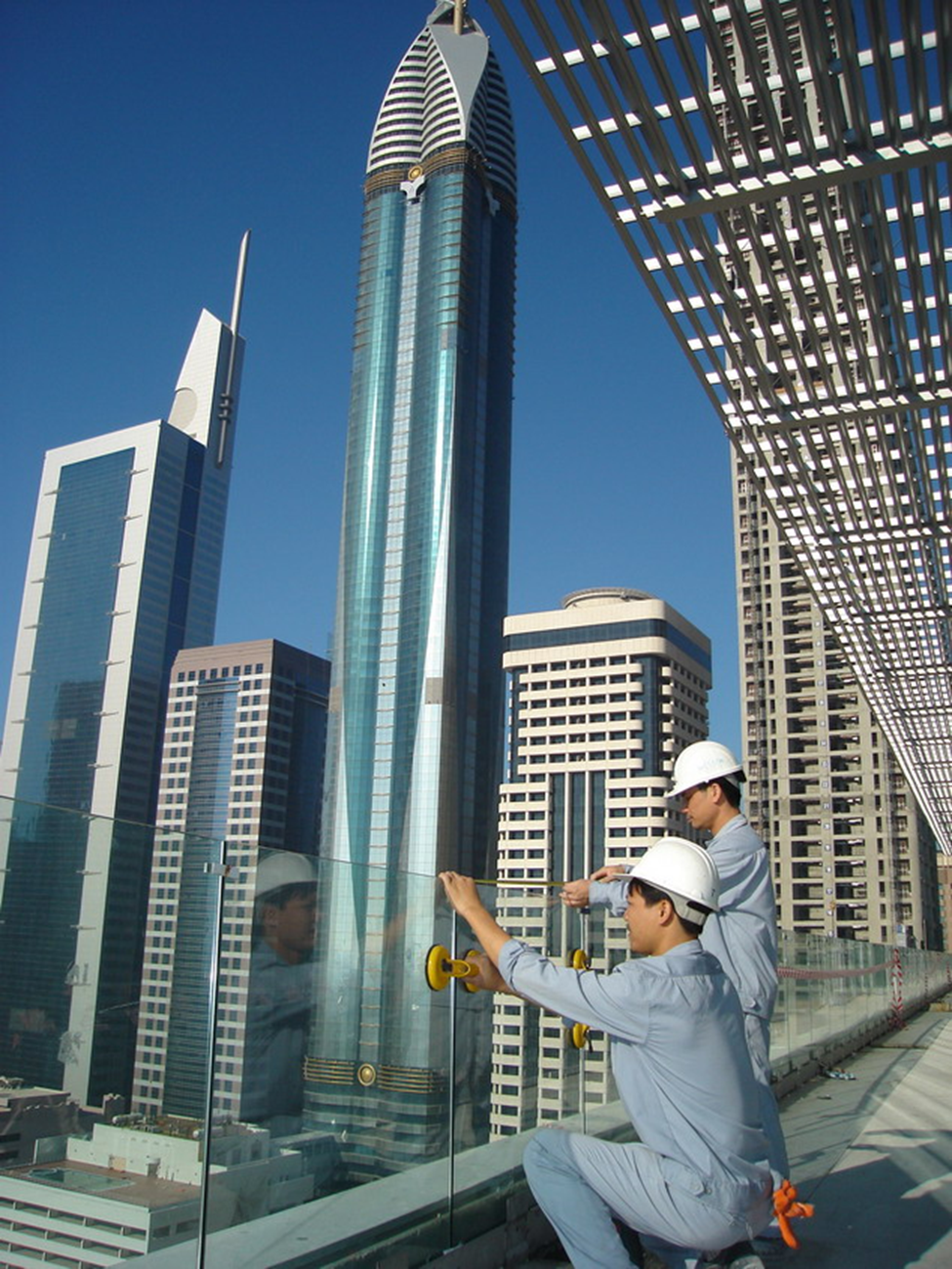
Viglacera’s energy-efficient glass plant was the first of its kind to be successfully established in Southeast Asia.
The company invested in an energy-efficient glass plant using technology from Von Ardenne GmbH of Germany, with a production capacity of 2.3 million m² per year. It was the first energy-efficient glass plant successfully established in Southeast Asia, supplying products to both the Vietnamese and regional markets.
Viglacera primarily manufactures two types of energy-efficient glass: Solar Control and Low-E. Solar Control glass can block approximately 5–95% of visible sunlight, up to 79% of solar energy, and up to 99% of ultraviolet radiation. Low-E glass, meanwhile, is coated with layers containing silver, helping reduce heat loss from the interior of a building to the external environment.
Thanks to their low emissivity and low thermal conductivity, energy-efficient glass products reduce heat transfer through glazed building envelopes. By limiting heat entering a building, they can reduce cooling demand; under appropriate conditions, Low-E glass also helps reduce heat loss from the interior to the outside.
Viglacera’s glass products account for approximately 60% of the domestic market and are exported to numerous countries worldwide.
The benefits of these products therefore extend beyond their technical performance to include reduced energy costs throughout the operational life of buildings. The glass products are designed for different climatic conditions, making them suitable for use in both northern and southern Vietnam.
Viglacera’s energy-efficient glass has obtained an Environmental Product Declaration (EPD) and is widely used in green buildings that prioritize quality of life, environmental friendliness, and reduced greenhouse effects.
Viglacera is also the first company in Vietnam to manufacture and commercialize ultra-clear glass. With its low iron content, the product offers greater transparency and light transmittance of 91.5%, compared with approximately 86% for conventional glass. Ultra-clear glass is used in architectural applications, premium interior and exterior design, and the automotive industry.
Notably, the product can also be used as a substrate for manufacturing solar panels, thereby supporting the renewable energy industry. Developing this glass product creates further opportunities to reduce production costs in the clean energy sector and helps expand access to renewable energy.
According to information provided by the company, Viglacera’s glass products currently account for approximately 60% of the domestic market and are exported to numerous countries. The development of energy-efficient and ultra-clear glass has helped diversify the company’s product portfolio, create competitive advantages, and strengthen its participation in the supply chain for green building materials.
In addition to glass and non-fired building materials, Viglacera continues to invest in technologies that improve energy and resource efficiency across other product lines.
In 2023, the company successfully produced Vasta Stone sintered stone, the first sintered stone brand in the Asia-Pacific region. The product uses natural raw materials that are readily available in Vietnam. Notably, the continuous rolling press consumes only one-sixth of the electricity required by conventional pressing methods, significantly reducing electricity consumption at this production stage.
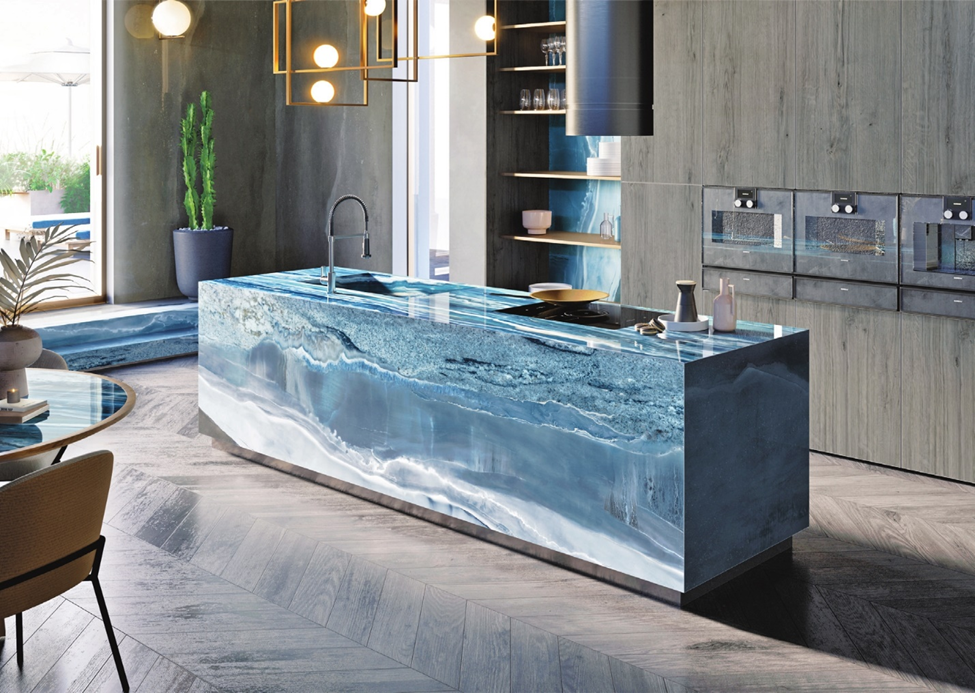
Vasta Stone sintered stone brings together advanced technology and excellence in architectural art and design.
Vasta Stone is 100% recyclable through the crushing and reuse of production waste, with no chemicals used in production or surface treatment. Available in dimensions of up to 6 × 4 meters, the product can replicate the appearance of various types of natural stone and offers a longer service life than natural stone, meeting diverse design requirements while helping reduce pressure on natural resource extraction.
In 2024, Viglacera upgraded Vasta Stone with through-body veining. According to Mr. Nguyen Duy Truc, Deputy Director of Viglacera Tien Son JSC and Director of the Viglacera Eurotile Factory, the product represents an advancement in the company’s technical expertise, production capabilities, and mastery of technology, bringing it closer to the demands of the premium consumer market. Vasta Stone has received GREENGUARD certification from UL Solutions (USA).
Also in 2024, Viglacera launched PVD color-coated faucets using technology from Protec Surface Technologies of Italy. According to Mr. Nguyen Van Tien, Director of Viglacera Faucet Joint Stock Company, PVD vacuum coating technology helps reduce chemical emissions and hazardous substances, contributing to environmental protection and consumer health. The product has obtained European RoHS certification for the restriction of hazardous substances.
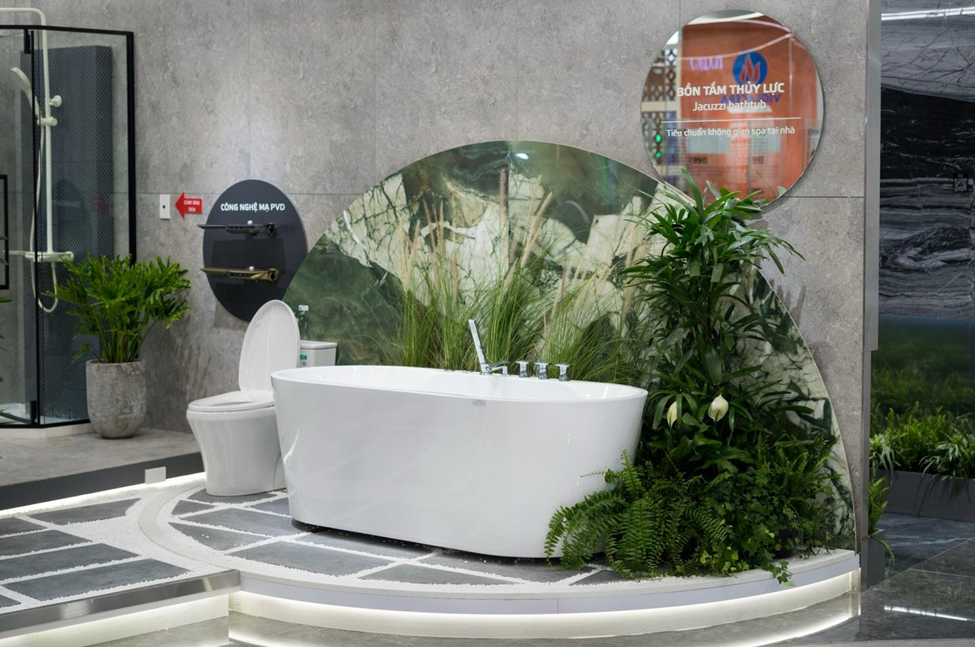
For sanitary ware, Viglacera has developed products featuring nano-glazing technology and a single-firing process, providing self-cleaning, antibacterial, anti-adhesion, and stain-resistant properties. These features help reduce the need for water and cleaning chemicals during maintenance. Water savings also help reduce pressure on natural resources and the energy required for water extraction, treatment, and supply.
These investments demonstrate that energy efficiency extends beyond reducing costs at the factory level. When integrated into products, its benefits can continue throughout the construction, operation, and maintenance phases of a building.
Green Technology Creates Competitive Advantages
From autoclaved aerated concrete and energy-efficient glass to sintered stone and sanitary ware, Viglacera is gradually developing an ecosystem of products designed to reduce energy consumption, conserve resources, and improve building performance.
Since 2023, Viglacera’s autoclaved aerated concrete products have been awarded the “Green Building Product” certification by the Singapore Green Building Council. Together with the EPD certification for energy-efficient glass and GREENGUARD certification for Vasta Stone, these certifications support the company’s access to markets that place a high value on environmental standards.
For the company, investment in technology helps improve product quality, enhance production efficiency at optimized stages, expand market access, and strengthen competitiveness. For developers, contractors, and users, the benefits include reduced building loads, lower structural costs, shorter construction times, and lower energy demand during operation.
Viglacera sanitary ware incorporates single-fired nano-glazing technology, providing smart self-cleaning, antibacterial, highly anti-adhesive, and stain-resistant properties.
In 2025, Viglacera launched its green building materials ecosystem. In 2026, the company followed this with a portfolio of six green and smart material solutions addressing key requirements of modern urban development, including resilience to storms and flooding, energy efficiency, faster construction, health protection, fire safety, and sustainable development.
The solutions include ultra-high-strength porcelain tiles that can be installed with open joints to allow rainwater to infiltrate into the ground; premium glazed roof tiles designed to prevent leakage and reduce the risk of tiles being blown off by strong winds; Solar Control and Low-E glass; ALC panels and large-format tiles; ViGuard™ highly antibacterial ceramic glaze; RoHS-compliant PVD-coated faucets; and touchless sanitary equipment.
Among these solutions, AAC and ALC autoclaved aerated concrete products offer fire resistance and can maintain the structural integrity of buildings for approximately four to six hours. Ultra-thin 6 mm sintered stone can replace materials prone to spreading fire, such as natural wood. Through-body veined sintered stone, wood-grain tiles, and water-efficient sanitary equipment are designed to reduce resource extraction, with sanitary equipment capable of reducing water consumption by up to 25%.
Through this portfolio of six solutions, Viglacera is shifting from supplying individual products toward an integrated solutions model covering multiple stages of the building life cycle. This approach enables the advantages of different materials to be combined, helping control costs, improve building quality, and reduce environmental impacts.
According to Mr. Nguyen Quoc Huy, Director of the Communications Department at Viglacera Corporation – JSC, through its efforts to invest in new technologies, promote green product development, pursue technical improvements, and apply environmentally friendly and energy-efficient production solutions, Viglacera is effectively implementing its Green Building Materials Development Strategy in Vietnam.
From an economic perspective, energy efficiency helps enterprises reduce cost pressures, improve resource utilization, and gain competitive advantages. From a social perspective, materials that reduce construction costs, shorten project timelines, and lower operating costs can deliver practical benefits to developers, contractors, and residents. Environmentally, reducing energy consumption, limiting resource use, and developing recyclable materials contribute to the green transformation of the construction industry.
Investment in energy-efficient technologies therefore serves not only production activities but has also become an integral part of Viglacera’s product development and market expansion strategy. It provides a foundation for the company to further integrate building material production with green real estate projects, with the ultimate goal of reducing emissions throughout the entire building life cycle.




 Viglacera: Energy Efficiency from Factories to Buildings (Part 1)
 Energy Efficiency Becomes a Driver of Improved Production Performance
 Enhancing Production Efficiency Through Energy Optimization
 Dong Lam Cement Promotes Energy Efficiency to Enhance Sustainable Production
 Polytex Pioneers Energy Efficiency in the Textile and Dyeing Industry
 27/10/2025


