


Tuesday, 15/09/2026 | 21:00
Case study
Enhancing Production Efficiency Through Energy Optimization
10:38 - 15/09/2026

Panasonic System Networks Vietnam Co., Ltd. continuously invests in technology, improves production processes, and applies modern energy management solutions.
Established in 2006, Panasonic System Networks Vietnam Co., Ltd. (PSNV) is a foreign-invested enterprise engaged in the assembly of electronic components and equipment. The factory manufactures a wide range of products, including cordless phones and microwave ovens.
Alongside requirements for product quality and production schedules, PSNV considers operational optimization, minimizing energy waste, and investing in high-efficiency technologies to be important factors in improving production efficiency.
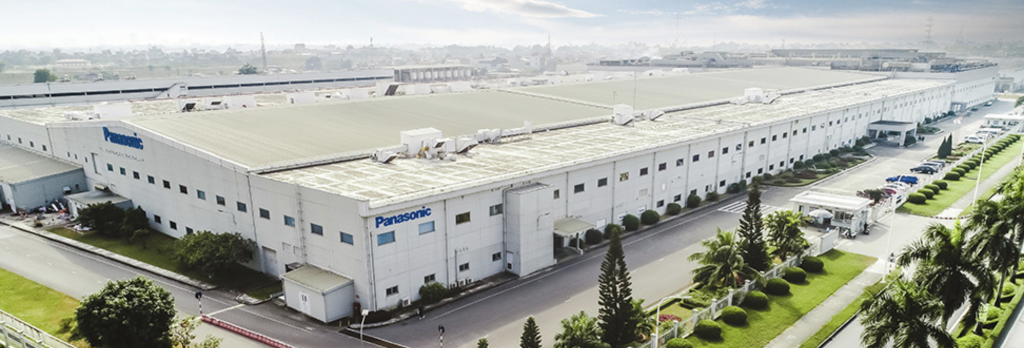
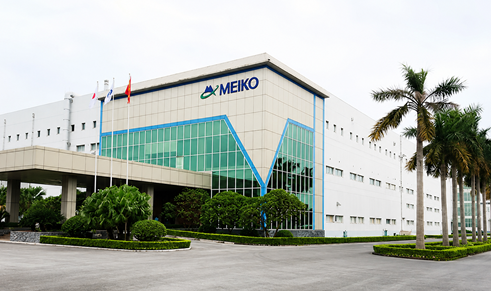
Panasonic System Networks Vietnam Co., Ltd.
As a designated energy-consuming facility, PSNV conducts periodic energy audits to assess consumption patterns, identify areas with energy-saving potential, and select appropriate improvement measures. The company’s energy management efforts range from employee training and awareness-raising on efficient energy use to assigning personnel responsible for energy management across departments and divisions. At the same time, PSNV has gradually invested in high-efficiency production equipment and strengthened the monitoring of electricity consumption by major energy-consuming equipment.
Utilizing Available Energy to Reduce Costs and Emissions
According to Ms. Vu Thi Thom, Environmental Staff at Panasonic System Networks Vietnam Co., Ltd., one of the measures that has delivered significant energy savings at the factory is the recovery of hot air for reuse in the heating system.
During production, hot air generated by the process would otherwise represent wasted energy if not utilized. Instead of allowing this heat to escape into the environment, PSNV recovers it and feeds it back into the heating system. Utilizing this available heat source reduces the amount of energy required to generate new heat.
“The hot-air recovery solution saves approximately 7,524 kWh of electricity per month, equivalent to a reduction of around 3.6 tonnes of CO₂ per month. This demonstrates how utilizing available energy within the production process can deliver dual benefits: reducing both energy costs and emissions,” Ms. Thom said.
For its air handling units (AHUs), PSNV has installed variable frequency drives to control the motors. Instead of operating continuously at a fixed high output, the VFDs allow the operating frequency to be adjusted according to actual demand. When the temperature decreases, the motor operating frequency is reduced accordingly, thereby limiting unnecessary energy consumption.
According to the company’s assessment, this solution not only reduces electricity consumption by AHU motors but also helps lower energy consumption by the chiller system, with overall system energy use potentially reduced by approximately 5%.
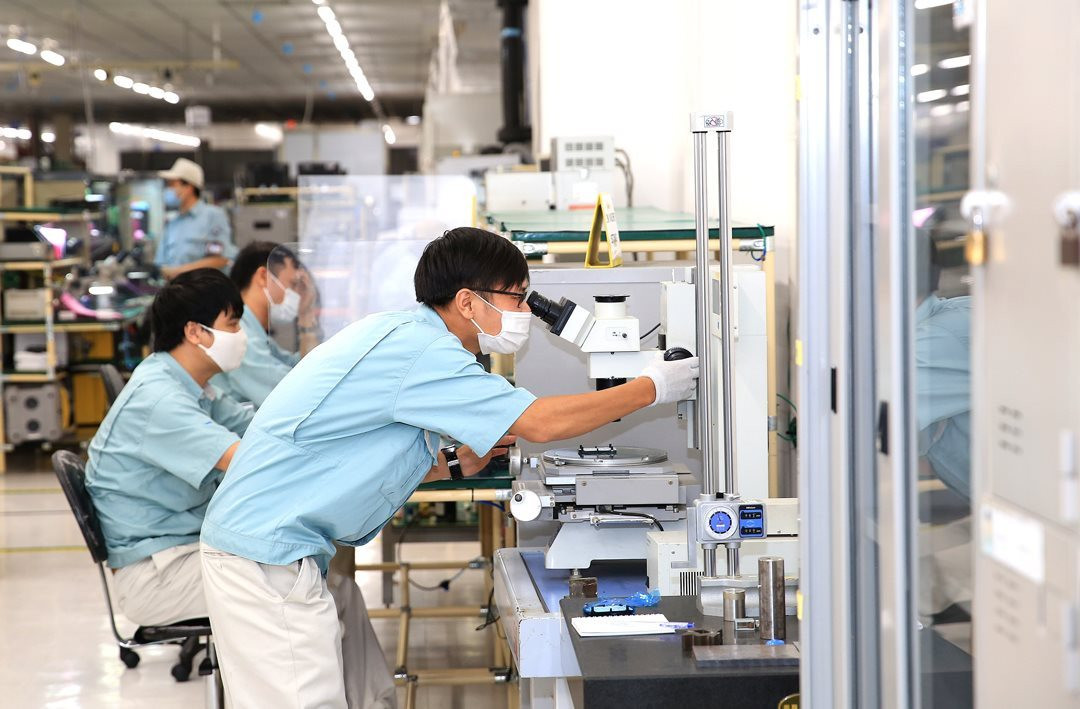
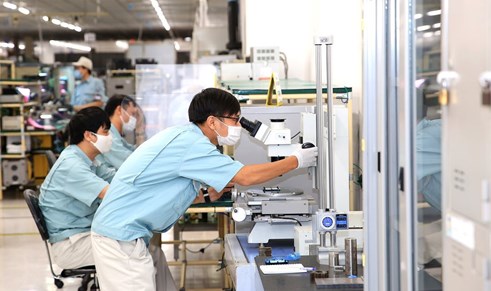
Production line at Panasonic System Networks Vietnam Co., Ltd.
In addition to electrical equipment and thermal systems, PSNV also focuses on controlling less visible forms of energy loss, including compressed-air leakage. Previously, leak detection was primarily carried out manually. However, small leaks are often difficult to detect using this method, while direct inspections at certain locations may pose risks in the event of system failures or sudden pressure loss.
To address these limitations, the company introduced compressed-air leak detection sensors. This technology makes it possible to pinpoint leaks, including very small leaks and those located at a distance. As a result, the energy management team can quickly identify areas requiring corrective action, reduce the time spent locating leaks, and minimize compressed-air losses.
As compressed-air losses decrease, the energy required to maintain system operation also falls. The application of leak detection technology demonstrates that energy management is not simply a matter of replacing electricity-consuming equipment; it also involves controlling energy losses throughout the entire operating process.
For its lighting system, PSNV has transitioned from fluorescent lamps to high-efficiency LED lighting. According to the company’s assessment, this measure reduces lighting energy consumption by approximately 43.5%, while extending lamp life to around three times that of the previous lighting system.
From Energy Efficiency to Data-Driven Energy Management
While earlier measures primarily focused on individual systems or pieces of equipment, 2025 marked a shift in PSNV’s approach as the company accelerated the application of digital technologies to energy management across the entire factory.
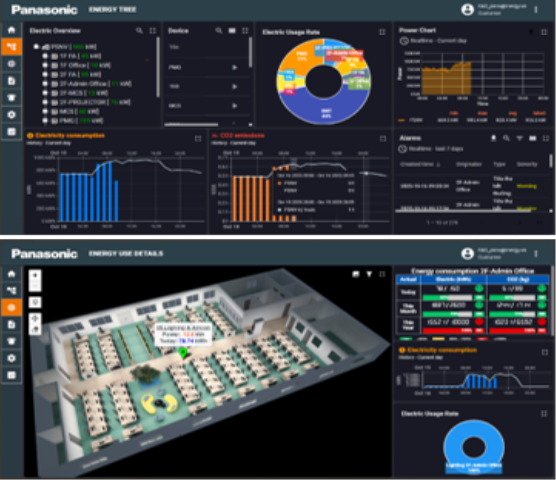
Factory Energy Management Software.
During operation, PSNV identified several limitations in the PEWVN system as requirements for energy management and analysis became increasingly demanding. Therefore, in 2025, the company transitioned to a factory energy management software system (FY2025 – Energy System). The system enables real-time monitoring, on-site data display at various locations across the factory, and remote access. Data are collected from equipment, production lines, and departments and then analyzed by work shifts, non-working days, and off-peak hours to identify energy waste.
The system provides SMS alerts for abnormalities such as overloads, overheating, and fluctuations in electricity consumption, while also allowing equipment to be remotely controlled when necessary. In addition to monitoring, the system supports operational control and equipment synchronization—for example, automatically stopping pumps and fans when a conveyor malfunctions—and recommends optimization measures such as adjusting machine operating cycles and utilizing alternative energy sources such as solar energy and LNG.
Data from the Energy System are used to evaluate performance, support periodic review meetings, identify areas of good and poor performance, and develop improvement action plans. The key benefits include reduced electricity consumption, lower operating costs, and reduced CO₂ emissions, while also supporting compliance with ISO 50001 requirements and ESG targets.
Overall, from specific technical measures to the application of digital technologies, PSNV is gradually transitioning from individual energy-saving measures toward comprehensive energy management and optimization. This approach not only helps reduce electricity consumption, operating costs, and CO₂ emissions, but also provides a foundation for continuous improvement, enhanced production efficiency, and sustainable development.


More
-
 Enhancing Production Efficiency Through Energy Optimization
10:38 - 15/09/2026
-
-
 Dong Lam Cement Promotes Energy Efficiency to Enhance Sustainable Production
14:04 - 28/08/2026
-
 Polytex Pioneers Energy Efficiency in the Textile and Dyeing Industry
14:36 - 25/08/2026
-
 VNSTEEL Thang Long Optimizes Energy Use, Moving Toward Green Production
10:16 - 11/08/2026
-
 CPV Food's Journey Toward Energy Efficiency and Environmental Protection
15:17 - 05/08/2026

EVENTS
-
 27/10/2025
WEBINAR 3 - ESCO Model, A key to promote energy efficiency and conservation
-
06/10/2025
WEBINAR 2 - Financial Support Industrial Enterprises in Energy Efficiency - Opportunities and Challenges
-
22/09/2025
WEBINAR 1 - Scaling Up Energy Efficiency in Vietnam


