


Thursday, 15/10/2026 | 01:50
News
Vietnam Joins Consensus on the Montreal Conference Declaration on Energy Efficiency
14:52 - 13/07/2026

Vietnam’s endorsement of the joint declaration is particularly significant as the country’s electricity demand continues to rise alongside industrialization, urbanization, and digital transformation.
The 11th Annual International Energy Agency (IEA) Conference on Energy Efficiency, held in Montreal, Canada, in late June, underscored a key global trend: energy efficiency is no longer viewed solely as a tool for reducing emissions but is increasingly recognized as a cornerstone of energy security, economic competitiveness, and national resilience to geopolitical uncertainties.
This was the first time the IEA’s annual Energy Efficiency Conference was hosted in North America. The event brought together more than 600 delegates, including dozens of ministers and senior government officials from over 40 countries, as well as more than 70 executives from leading global energy, finance, and technology companies.
The conference took place against the backdrop of continued volatility in global energy markets caused by conflict in the Middle East and disruptions to shipping through the Strait of Hormuz, a critical route for oil, liquefied natural gas (LNG), and other essential energy commodities.
Against this backdrop, participating countries agreed that energy efficiency represents one of the fastest and most cost-effective solutions for reducing energy bills for households and businesses while strengthening national energy security.
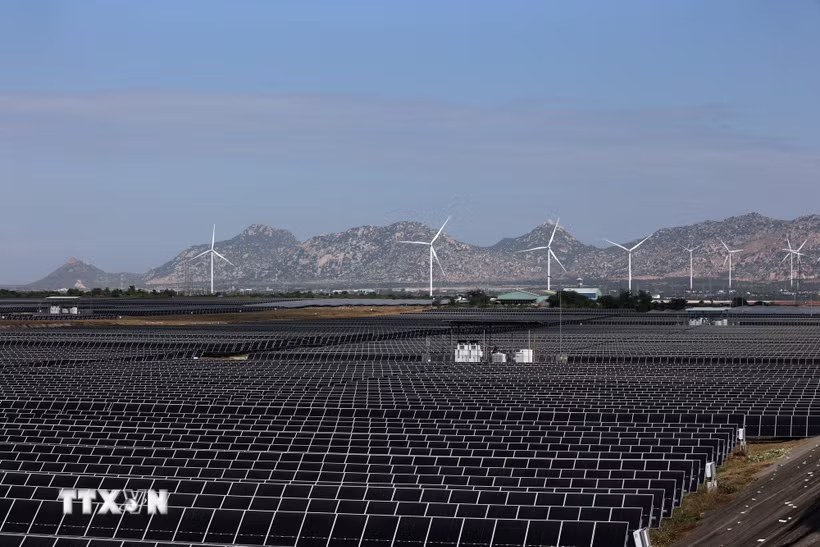
An onshore wind and solar power farm in Vietnam (Source: TTXVN).
The conference’s message that "energy efficiency comes first" was reaffirmed in the Montreal Declaration on Energy Efficiency, also known as the Montreal Action Plan, released at the conclusion of the conference.
The Declaration reaffirmed the global commitment to doubling the average annual rate of energy efficiency improvement by 2030, a target first agreed upon by countries at the 28th United Nations Climate Change Conference (COP28) in 2023.
Ministerial discussions focused on two major priorities. The first was protecting vulnerable groups, including low-income households and small and medium-sized enterprises (SMEs), from energy price shocks.
The second focused on building long-term resilience through building retrofits, higher equipment efficiency standards, electrification, grid modernization, and mobilizing private investment for energy efficiency projects. Participating countries also shared policy experiences and best practices.
During thematic sessions, energy efficiency was closely linked to industrial competitiveness. Business leaders and financial institutions emphasized that many energy-saving solutions are already commercially available, including high-efficiency equipment, variable-speed drives for electric motors, building performance standards, energy consumption data systems, and smart grids. However, they stressed that stable, transparent, and predictable policy frameworks are essential to encourage businesses to invest confidently.
A new highlight of this year's conference was the connection between energy efficiency, artificial intelligence (AI), data centers, and the emerging "Age of Electricity." Global electricity demand is rising rapidly due to the electrification of transport, heating, and industry, together with the rapid expansion of AI and digital infrastructure. Participants agreed that without significant improvements in electricity efficiency, growing demand from data centers and high-tech industries could place substantial pressure on power systems.
For Canada, hosting the conference provided an opportunity to reinforce its role as a reliable global energy partner. Canada highlighted its strengths in hydropower, nuclear energy, liquefied natural gas, critical minerals, offshore wind, and small modular reactor (SMR) technologies. The country also emphasized that energy efficiency is an integral component of its clean energy strategy, green industrial development, and productivity enhancement agenda.
Notably, Vietnam was among the participating countries and joined the consensus on the Montreal Conference Declaration on Energy Efficiency, reaffirming together with the international community the principle that "energy efficiency comes first" and supporting the goal of doubling the global rate of energy efficiency improvement by 2030.
Observers consider Vietnam’s participation in the consensus declaration particularly meaningful at a time when the country's electricity demand continues to increase due to industrialization, urbanization, and digital transformation.
Many of the issues discussed during the conference—including improving equipment energy performance standards, retrofitting buildings, supporting SMEs, demand-side management, developing energy data systems, and preparing for the growing electricity needs of data centers—are all highly relevant to Vietnam as it works to strengthen energy security and fulfill its green transition commitments.
Moreover, joining the Montreal Conference Declaration on Energy Efficiency provides Vietnam with a foundation for further exploring deeper participation in the IEA’s multilateral cooperation mechanisms on energy efficiency. Such engagement could offer valuable access to data, policy experience, technical tools, and public-private partnership models in the field of energy efficiency.
Overall, the Montreal Conference demonstrated that energy efficiency has become a strategic priority for countries around the world. In a world where energy supplies can be disrupted by geopolitical conflicts, fuel prices remain volatile, and electricity demand continues to rise rapidly, countries that use energy more efficiently will be better positioned to protect consumers, sustain economic production, and strengthen their long-term competitiveness.


More
-
-
-
 Energy Efficiency and Conservation in the Chemical Industry
15:34 - 21/09/2026
-
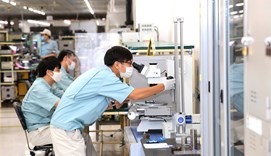 Enhancing Production Efficiency Through Energy Optimization
10:38 - 15/09/2026
-
 Improving Energy Efficiency in Seafood Processing Industrial Sector
14:25 - 09/09/2026
-

LATEST NEWS
EVENTS
-
 27/10/2025
WEBINAR 3 - ESCO Model, A key to promote energy efficiency and conservation
-
06/10/2025
WEBINAR 2 - Financial Support Industrial Enterprises in Energy Efficiency - Opportunities and Challenges
-
22/09/2025
WEBINAR 1 - Scaling Up Energy Efficiency in Vietnam


