Energy Efficiency Becomes a Driver of Improved Production Performance
Thứ tư, 21/10/2026 - 14:02
Rather than focusing solely on improving productivity and product quality, C.P. Vietnam Livestock Corporation – Xuan Mai Branch has identified energy efficiency and conservation as one of the key solutions for reducing costs, limiting emissions, and enhancing competitiveness.
C.P. Vietnam Livestock Corporation – Xuan Mai Branch (CP Xuan Mai) is part of Charoen Pokphand Group (CP Group, Thailand), one of the world’s leading agri-food groups with more than 100 years of development. Building on the Group’s advanced science and technology capabilities, CP Xuan Mai has continuously innovated and adopted modern technologies in its production processes, including automated grinding and mixing systems, sensor-based temperature and humidity control, smart management software, and product traceability systems in accordance with international standards. These solutions not only contribute to higher productivity and consistent product quality but also enable the company to better control energy consumption and environmental impacts.
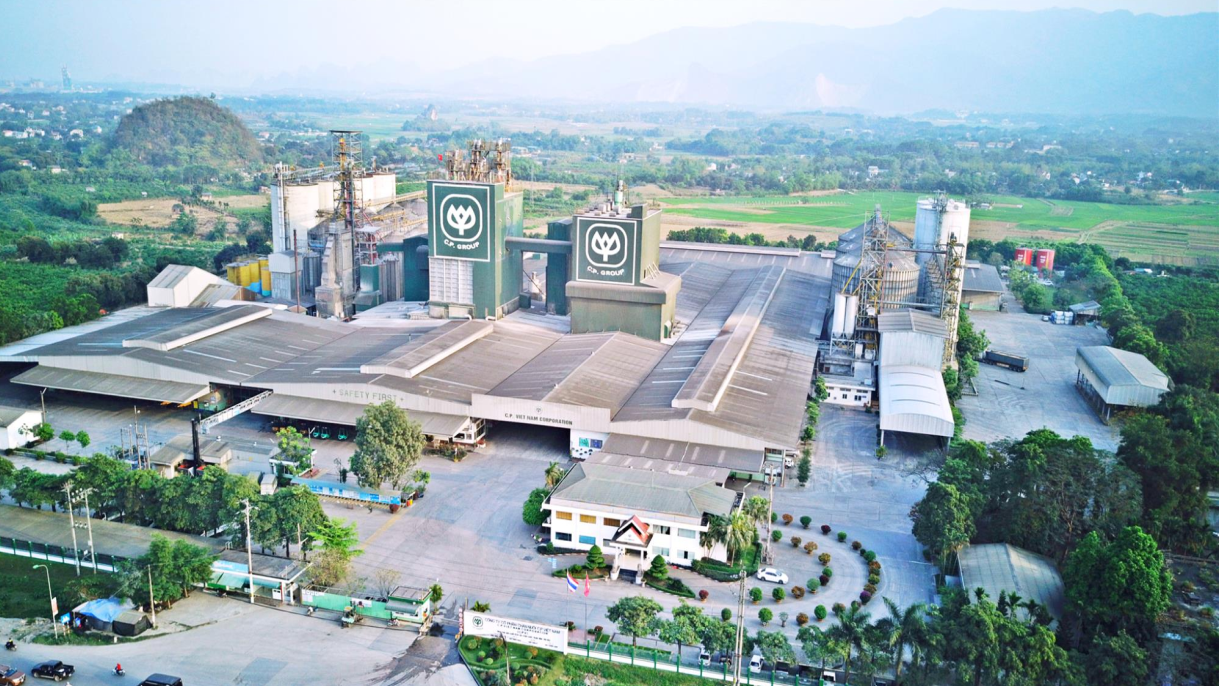
C.P. Vietnam Livestock Corporation specializes in the production of livestock and poultry feed for the integrated livestock production system in northern Vietnam.
As a designated energy-consuming enterprise, CP Xuan Mai recognizes that economic development must go hand in hand with energy efficiency and environmental protection. From the initial design stage, the factory prioritized the selection of energy-efficient equipment while optimizing the use of electricity, steam, water, and other resources.
In line with the Group’s policies, the company established an Energy Management Committee responsible for identifying and establishing the main energy-consuming areas and subsequently developing solutions to improve energy performance. The Energy Management Committee also regularly organizes awareness-raising training, monitors implementation, and encourages employees to propose improvement initiatives within each production workshop.
The company’s energy policy has also been endorsed by its management and communicated to all departments and production workshops. Awareness-raising activities are carried out through various channels, including posters, notice boards, training sessions, emails, announcements, pre-shift briefings, periodic inspections, and direct reminders at workplaces. Each month, the factory holds meetings to review energy performance indicators and report implementation results to management in order to determine subsequent actions.
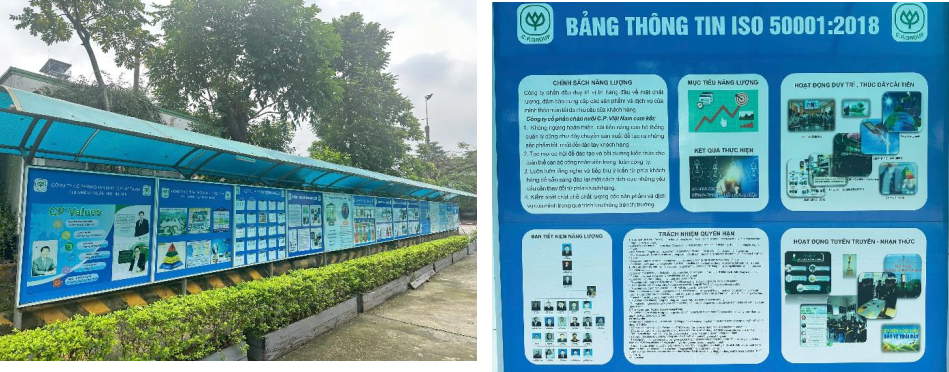
Information area displaying the company’s policies and energy management systems.
The company’s management has developed energy efficiency and conservation programs in accordance with the ISO 50001 Energy Management System. In December 2019, the company was assessed by SGS and certified to ISO 50001:2018 for its Energy Management System. Since then, the system has been continuously maintained and improved, providing a foundation for the company to better control energy use throughout its production processes.
In addition, the factory has implemented the Smart EE intelligent energy management system developed by TAT Thailand. Smart EE is connected to smart meters to collect and transmit data to computers, providing users with information on the energy consumption of individual systems.
A notable feature of Smart EE is its ability to record energy consumption data for individual energy users at one-minute intervals and automatically store the data on a continuous basis. This enables the company to monitor not only electricity consumption but also the operating patterns of individual systems, assess equipment conditions, and detect signs of abnormal operation.
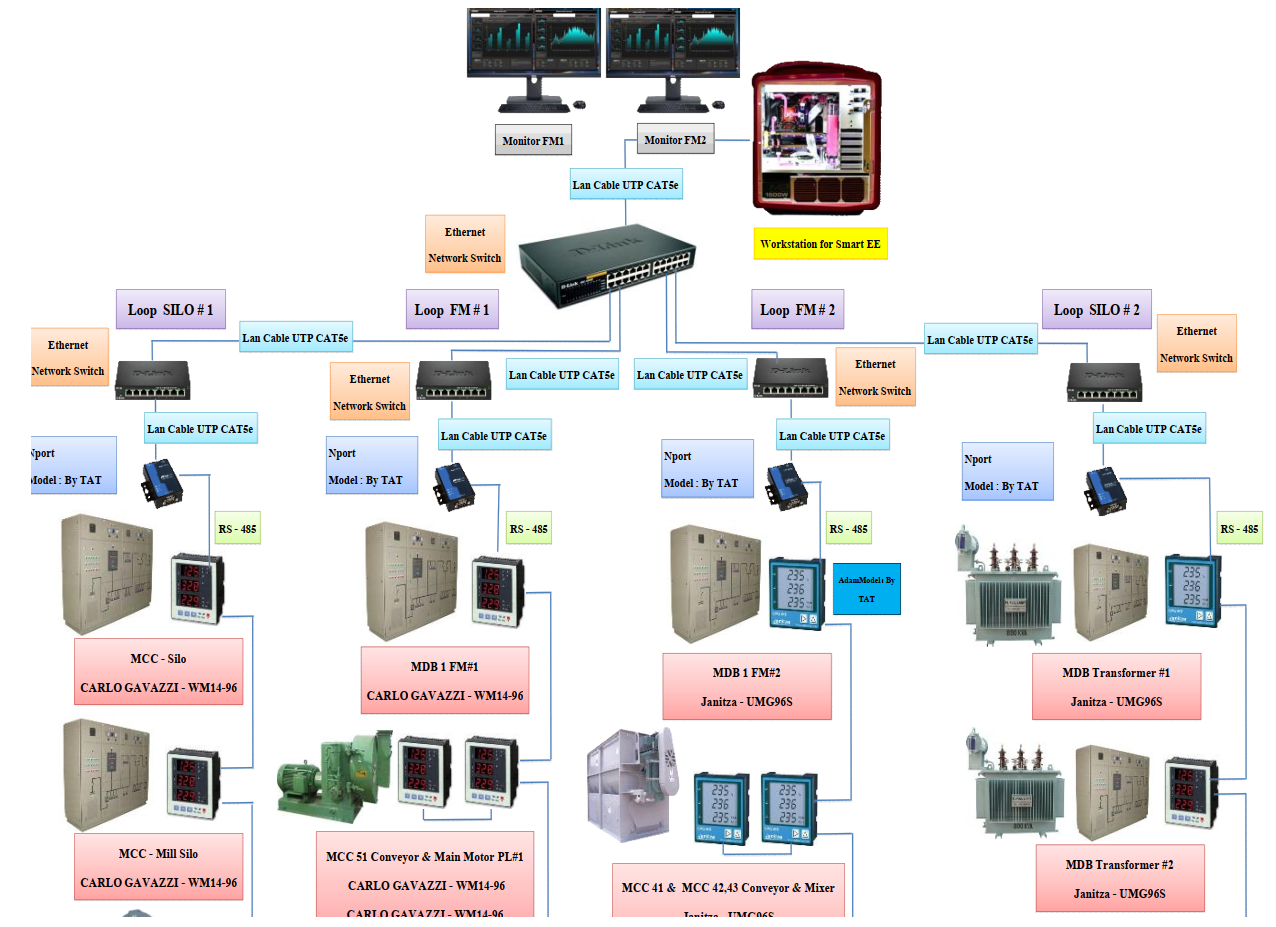
Diagram of the factory’s Smart Energy Efficiency (Smart EE) system.
The Smart EE system is configured to generate alerts for inefficient energy use, such as equipment running idle, compressed-air pressure drops, leaks, or heat losses caused by system failures. These alerts are linked to smartphones through the LINE application, enabling operators to receive information promptly and take corrective action. The collected data also provide a basis for the Energy Management Committee to analyze areas of inefficient energy use, identify underlying causes, and develop improvement plans.
Building on this management and measurement platform, CP Xuan Mai has implemented a range of specific technical measures. Among them, the biomass-fired boiler system is one of the factory’s significant energy users, accounting for approximately 54% of its total energy consumption.
Following an assessment, the company found that the heat exchange system was not being effectively utilized to preheat boiler feedwater, resulting in heat losses during water heating in the feed tank. The factory therefore improved the system by installing an additional intermediate tank and a circulation pump system. After treatment through the softener, water is transferred to the intermediate tank and then pumped through the heat exchanger for heating before being circulated back to the tank. When the boiler requires feedwater, the feed tank pumps hot water into the boiler. When the water level in the feed tank falls, an electric valve automatically opens to supply preheated hot water from the intermediate tank instead of feeding cold water directly from the softener. According to the company’s assessment, this solution saves more than VND 1.2 billion annually and reduces CO₂ emissions by approximately 19.22 tonnes per year.
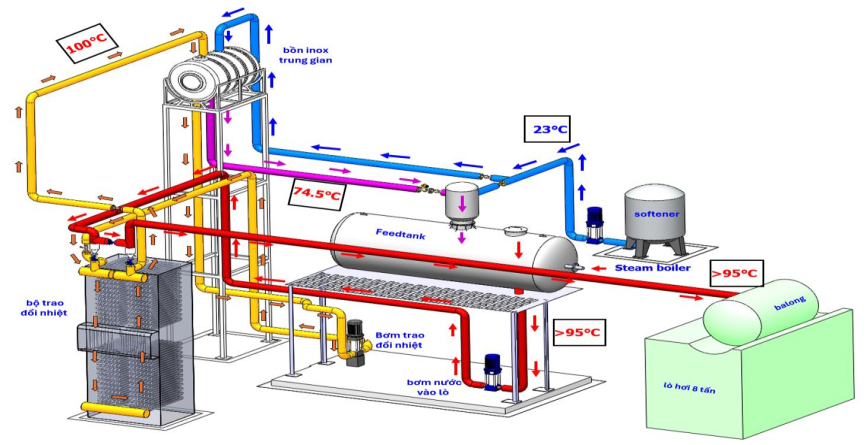
Diagram of the boiler system after improvement.
In 2025, in response to increasing production demand and the need to ensure a continuous and stable supply of raw materials, the factory continued to implement a project to increase the capacity of its material receiving system. After analyzing the capacities of equipment along the production line, the company identified the cleaning machine as requiring improvement. Rather than investing in an entirely new system, CP Xuan Mai focused on upgrading the existing equipment by increasing the rotational speed of rollers No. 1 and No. 2; increasing the clearance between rollers No. 1 and No. 2 and the support plate from 20 mm to 40 mm; and adjusting airflow and feeder settings to match the new capacity.
The results demonstrated clear improvements in both capacity and energy consumption. At Silo 1, receiving capacity increased from 110 to 150 tonnes per hour, while specific energy consumption decreased from 1.1 to 0.8 kWh/tonne. Energy savings reached 3,680.8 kWh per month, equivalent to approximately VND 91.125 million per year. At Silo 2, receiving capacity increased from 100 to 150 tonnes per hour, while specific energy consumption decreased from 0.8 to 0.5 kWh/tonne, resulting in savings of 2,759 kWh per month, equivalent to approximately VND 69.014 million per year. The project generated total savings of approximately VND 160.139 million per year, against an investment cost of only around VND 5.7 million, resulting in a payback period of approximately 13 days according to the company’s calculations. The solution also reduces CO₂ emissions by approximately 50.94 tonnes per year.
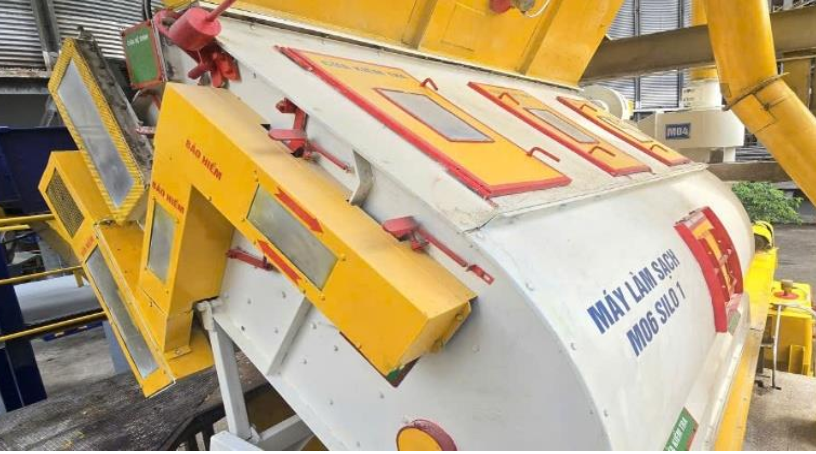
Silo cleaning machine after improvement.
Another initiative implemented on the Extruder, a piece of equipment used for cooking FFS and popcorn raw materials, also demonstrates the effectiveness of combining equipment improvements with heat recovery in the production process. Following new requirements from the quality control department, the machine’s operating capacity was reduced, resulting in increased electricity consumption and operating costs. After analysis, the factory changed the motor pulley to prevent screw conveyor overload while also increasing the retention time of materials after they exit the extrusion die. In particular, the heat retained in the material after it exits the die is utilized to maintain the conditioning process before the material is transferred to the cooler.
Following the improvement, soybean cooking capacity increased from 2.2 to 4 tonnes per hour, while electricity consumption decreased from 40 to 26.2 kWh/tonne. For corn cooking, capacity increased from 4.4 to 5.5 tonnes per hour, while electricity consumption decreased from 33.7 to 22.9 kWh/tonne. The FFS retention time at a temperature of 125°C was increased from 24 to 320 seconds. According to company data, electricity cost savings from soybean cooking reached VND 36.67 million per month, while savings from corn cooking reached VND 23.92 million per month, bringing total savings to approximately VND 727.04 million per year.
Alongside direct equipment improvements, CP Xuan Mai is accelerating automation to minimize energy losses arising during operation. In 2025, the factory continued to improve its pelletizing process through the Smart Pellet Mill program. The system operates automatically based on predefined standard input parameters, with the amount of steam supplied to the feed controlled through Steam Flow. Automation enables tighter control over steam consumption, reduces losses during start-up, and improves operational efficiency. The Auto Stop Line program has also been introduced to automatically stop production lines when production is completed, thereby preventing equipment from running idle and consuming unnecessary electricity.
In 2025, CP Xuan Mai installed 21 solar-powered lights, including eight 450 W units and thirteen 150 W units. These lights were installed along internal roads and throughout the factory premises to utilize renewable energy, reduce demand for grid electricity, and improve nighttime lighting.
At CP Xuan Mai, energy efficiency is no longer measured solely in terms of energy and cost savings; it is becoming an integral part of the company’s operational mindset and production culture. This also provides a solid foundation for CP Xuan Mai to continue improving efficiency, reducing emissions, and moving toward a greener and more sustainable production model.