Improving Energy Efficiency in Seafood Processing Industrial Sector
Thứ tư, 09/09/2026 - 14:25
Energy costs and emissions can be reduced simultaneously. Energy efficiency not only helps enterprises lower operating costs but is also becoming a practical solution for enhancing competitiveness and accelerating the greening of the seafood industry.
For decades, seafood has been one of Vietnam’s key export sectors, making a significant contribution to trade turnover while creating jobs and livelihoods for millions of people. In 2025, Vietnam’s seafood exports reached approximately USD 11.3 billion. In the first six months of 2026, export turnover reached USD 5.76 billion, up 12.7% year-on-year.
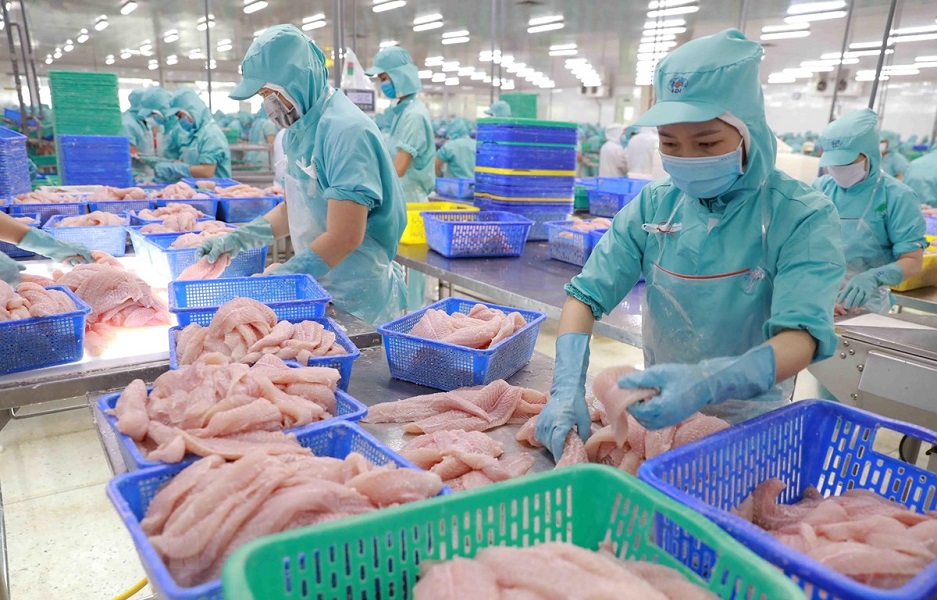
However, behind this growth lies increasing pressure from production costs, environmental standards, traceability requirements, and sustainability expectations in importing markets. At Vietfish 2026, the theme “Innovation and Sustainability” also highlighted how green transition is becoming an increasingly important part of the strategy to enhance the value and competitiveness of Vietnam’s seafood industry.
Against this backdrop, energy is one of the issues that needs to be prioritized. Electricity is not only a significant operating cost, but energy consumption is also directly associated with emissions and enterprises’ ability to meet the increasingly stringent requirements of international supply chains.
Optimizing Drive Systems to Reduce Energy Consumption
At the workshop “Global Seafood Market and the Future Workforce Generation: Trends, Opportunities and Directions for Sustainable Development of Vietnam’s Seafood Industry,” held within the framework of VIETFISH 2026, Mr. Tran Anh Xuan, Local Business Area Manager of ABB Vietnam’s Motion Business, focused on the relationship between energy efficiency, operating costs, and green transition in seafood processing plants.
According to Mr. Tran Anh Xuan, many energy-saving opportunities in seafood processing facilities lie in systems that operate at high capacity and for long periods, such as refrigeration systems, compressors, pumps, fans, conveyors, and water treatment systems. These are also equipment groups in which electric motors are widely used.
Therefore, even small improvements in efficiency can generate significant savings when equipment operates for thousands of hours each year.
The ABB representative noted that electric motors currently convert more than 45% of the world’s electricity into motion, while fewer than 20% of motors are controlled by variable speed drives. This indicates that there remains substantial potential to improve the efficiency of drive systems.
For the seafood industry, this issue is particularly important because processing operations typically rely on refrigeration systems, pumps, fans, and compressors that must operate continuously to maintain stable temperatures, flow rates, and production conditions.
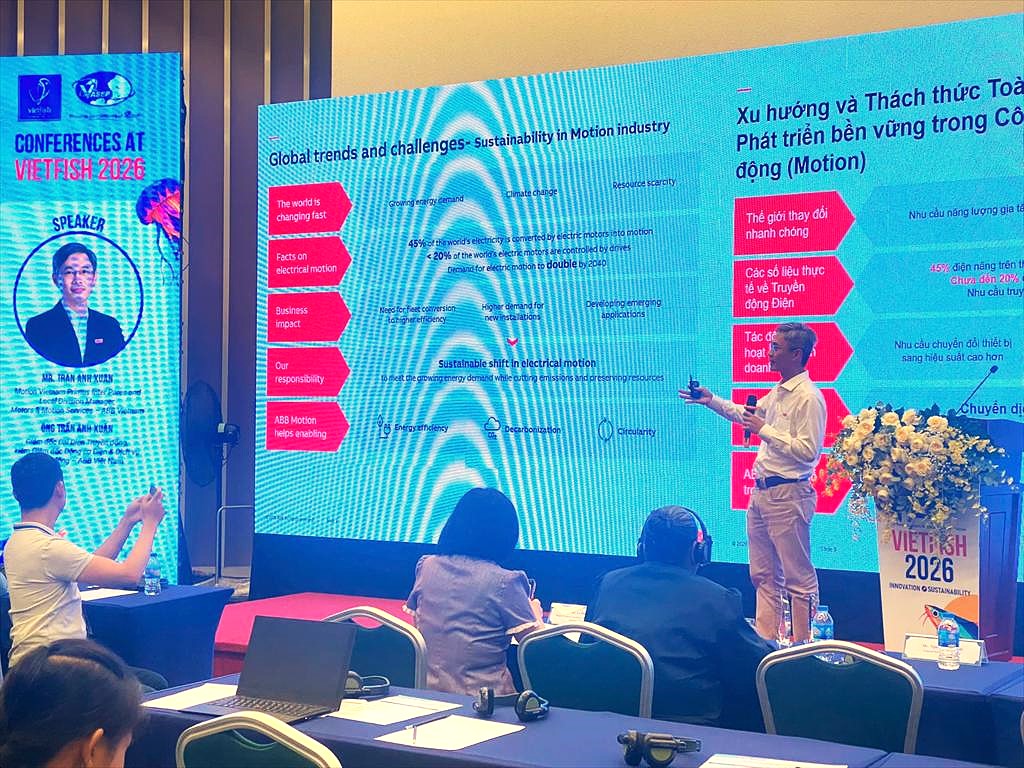
Mr. Tran Anh Xuan, Local Business Area Manager of ABB Vietnam’s Motion Business, shares insights on green transition and energy efficiency in the seafood industry. (Photo: VASEP)
Mr. Tran Anh Xuan emphasized that energy efficiency is not simply about replacing low-efficiency motors with higher-efficiency ones. Efficiency classes from IE1 to IE5 reflect different levels of motor energy losses. However, the actual efficiency of the entire system also depends on many factors, including capacity selection, load conditions, operating hours, and control methods.
A high-efficiency motor that is significantly oversized for actual demand, frequently operates under unsuitable load conditions, or continuously runs at maximum speed can still result in energy waste. ABB therefore recommends optimizing the entire drive system, including the use of high-efficiency motors and variable speed drives, appropriate capacity selection, load monitoring, and control based on actual demand.
In particular, for equipment such as pumps, fans, and compressors—systems that often operate under variable loads—variable speed drives can adjust motor speed according to actual demand instead of allowing motors to continuously operate at maximum capacity. Matching motor speed to the load can significantly reduce energy consumption while also reducing mechanical stress and helping extend equipment life.
From Energy Savings to Enhanced Competitiveness
According to Mr. Tran Anh Xuan, energy efficiency should be viewed as a measurable investment opportunity. Enterprises can start with systems that consume large amounts of electricity and measure energy use before and after improvements, thereby determining the amount of energy saved as well as the payback period.
When energy costs and emissions are reduced simultaneously, energy efficiency not only helps enterprises lower operating costs but also becomes a practical solution for enhancing competitiveness and accelerating the greening of the seafood industry.
From a regulatory perspective, requirements for efficient energy use are also becoming increasingly specific. Under Circular No. 52/2018/TT-BCT regulating energy consumption norms in the industrial processing of pangasius and shrimp products, the requirements apply to facilities with an annual output of 300 tonnes of products or more. During the 2026–2030 period, the energy consumption norm for pangasius products must not exceed 900 kWh per tonne of equivalent product, while the corresponding limit for shrimp products is 1,625 kWh per tonne.
These requirements demonstrate that energy efficiency is gradually evolving from an internal cost-optimization issue into a requirement closely linked to the competitiveness and sustainable development of seafood enterprises. As the industry moves toward markets with increasingly stringent standards, controlling energy consumption, reducing emissions, and improving operational efficiency could become decisive factors in enterprises’ ability to participate more deeply in global seafood supply chains.