Hanoi – Thanh Hoa Beer Optimizes Energy Efficiency in Production
Thứ hai, 20/07/2026 - 14:59
By improving its refrigeration system, automating production lines, and recovering waste heat, Hanoi – Thanh Hoa Beer Joint Stock Company has progressively optimized energy consumption throughout its brewing process.
For many years, Hanoi – Thanh Hoa Beer has maintained a strategy of investing in modern equipment and advanced technologies while promoting energy-efficient production. The company has established an Energy Management System (EnMS), conducted regular energy audits, and integrated energy-saving objectives into both its production processes and internal management.
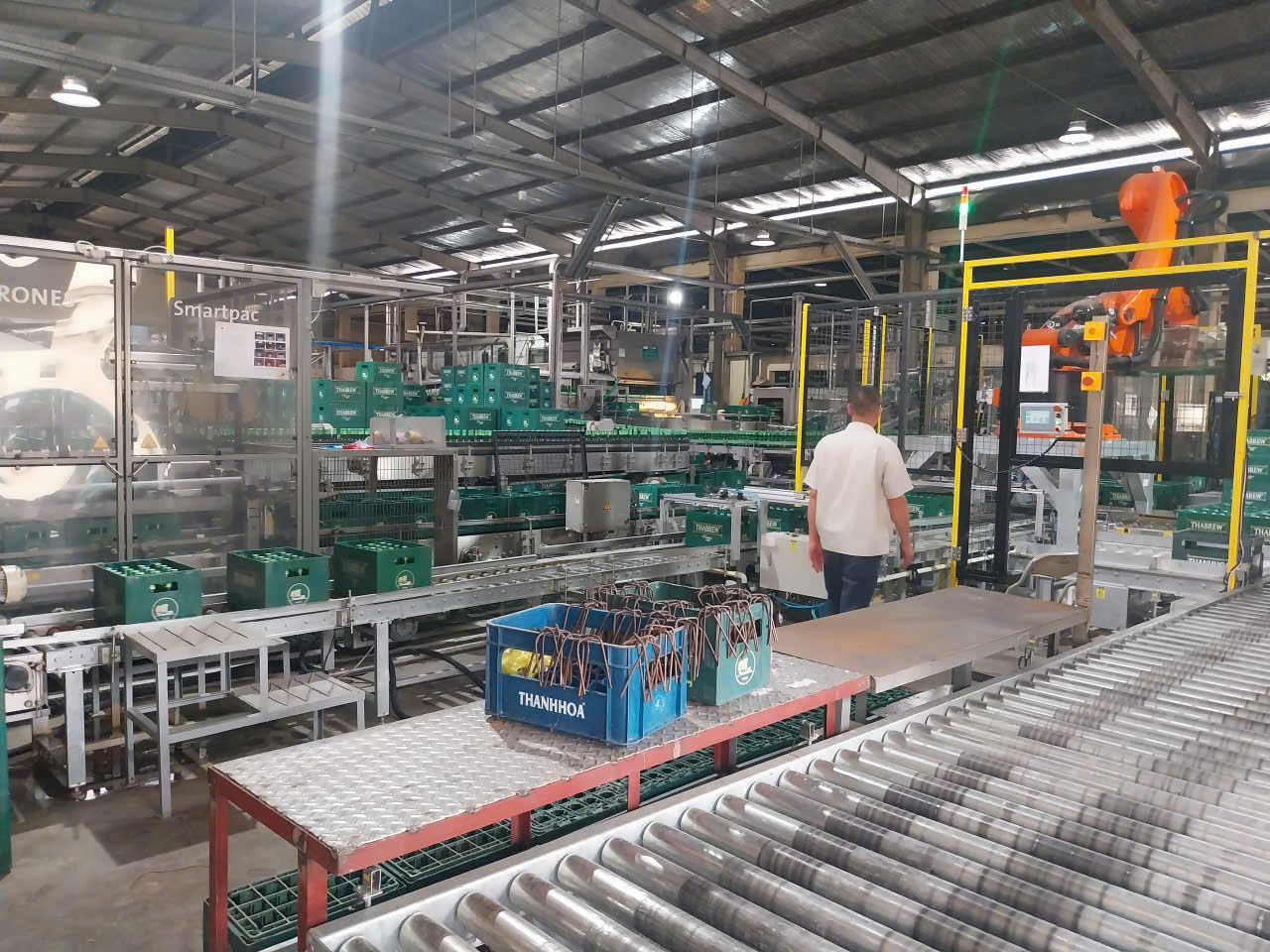
The fully automated bottling production line at Hanoi Beer – Thanh Hoa Joint Stock Company.
Alongside management measures, the company has continuously upgraded equipment and optimized operations across multiple production stages. During the 2020–2024 period, it implemented numerous energy-saving initiatives, including: Adjusting refrigeration system operations to maximize off-peak electricity use; Upgrading the Clean-in-Place (CIP) system and automated brewhouse; Installing an 8-ton-per-hour steam boiler; Strengthening monitoring and control of compressed air and steam leaks; Upgrading the condenser system to operate according to ambient temperature and pressure; Recovering and reusing water from the filter regeneration process.
The company also invested extensively in automation to improve operational efficiency, including automated malt storage and feeding systems, an automatic sugar and hop extract preparation system, and a fully automated rapid pasteurization system for PET beer production.
According to Mr. Le Van Hoi, Head of the Mechanical and Electrical Engineering Department at Hanoi – Thanh Hoa Beer: "Thanks to the integrated implementation of these measures, many of our energy performance indicators have improved significantly. Coal consumption has been reduced from 75 kg per 1,000 liters of beer in 2005 to 70 kg per 1,000 liters in 2024, while water consumption has decreased from 11 liters to 6.5 liters of water per liter of finished beer."
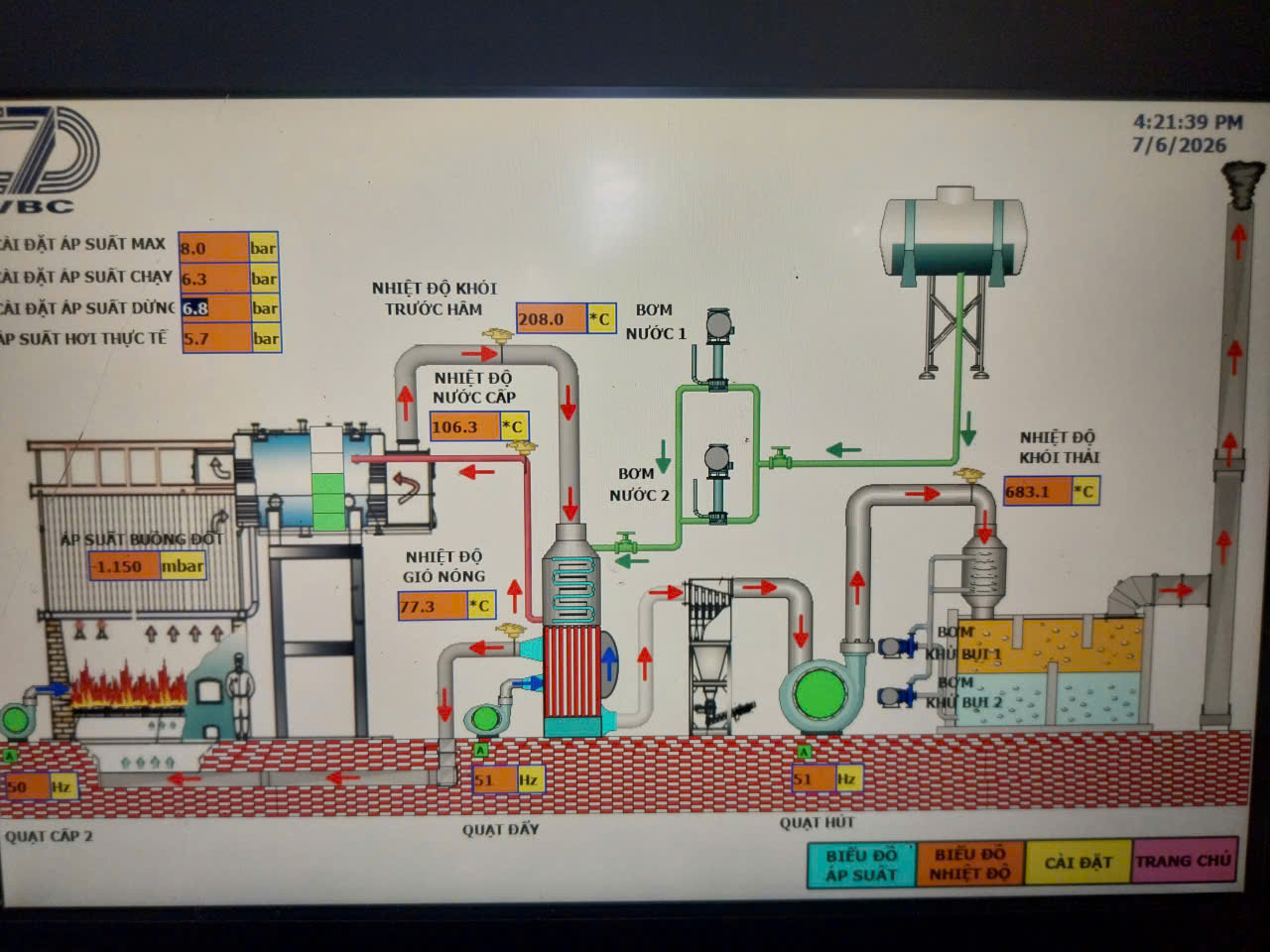
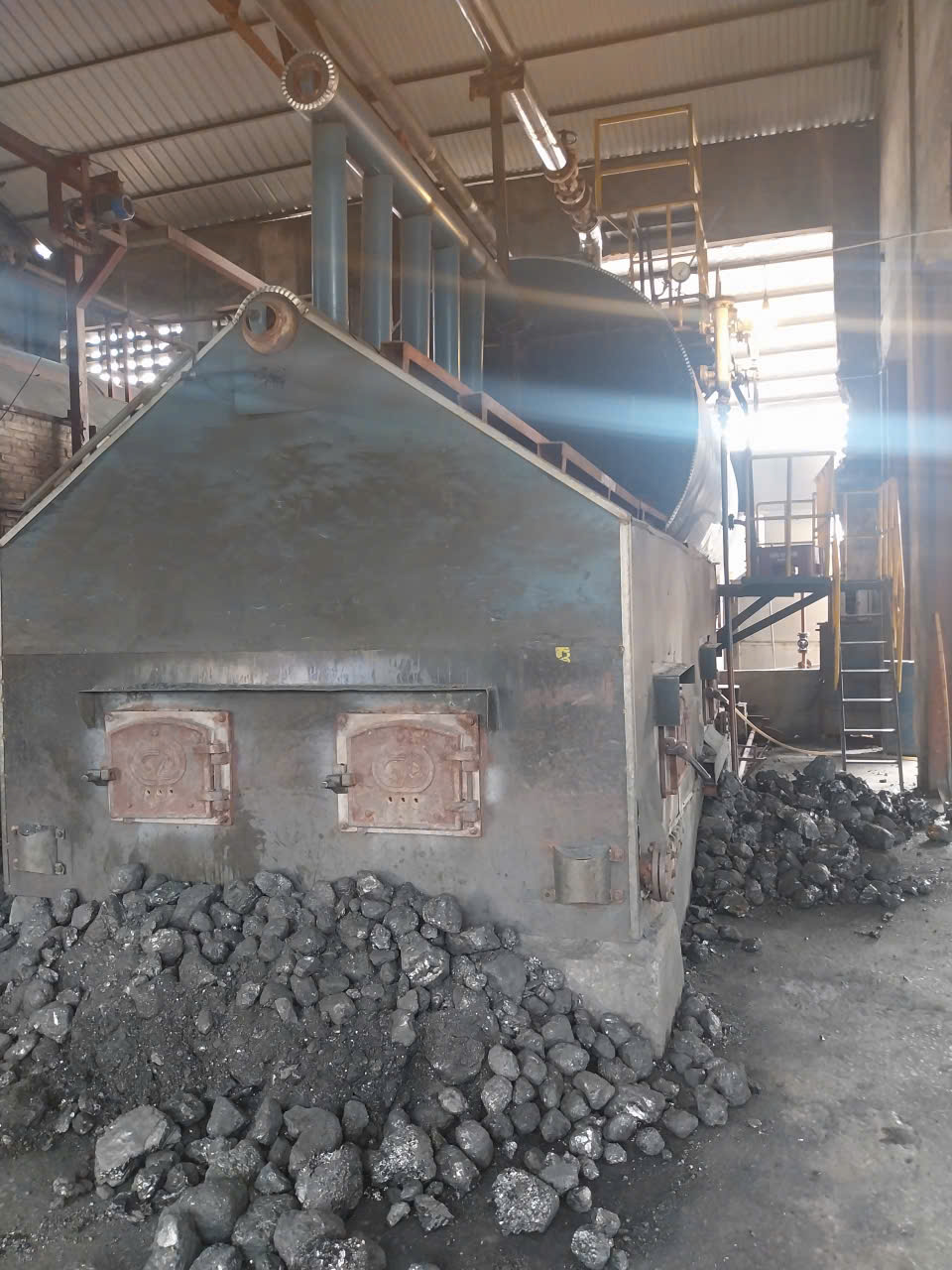
The new boiler system features continuous monitoring of flue gas quality, combustion chamber temperature, and pressure, maintaining combustion pressure between 0.05 and 0.07 bar.
One of the company's most notable energy-saving initiatives in 2025 is the application of a two-stage wort cooling system combined with 6°C chilled water storage during off-peak electricity hours. Introduced in October 2024, this solution transformed the cooling process following wort boiling—one of the most energy-intensive stages in beer production.
Previously, wort was cooled directly from approximately 98°C to 10°C using 2°C chilled water in a single-stage process, requiring the refrigeration system to operate continuously at high capacity. Under the new approach, cooling is divided into two stages: In the first stage, ambient-temperature water cools the wort from 98°C to approximately 40–45°C. In the second stage, 6°C chilled water further cools the wort to 10°C.
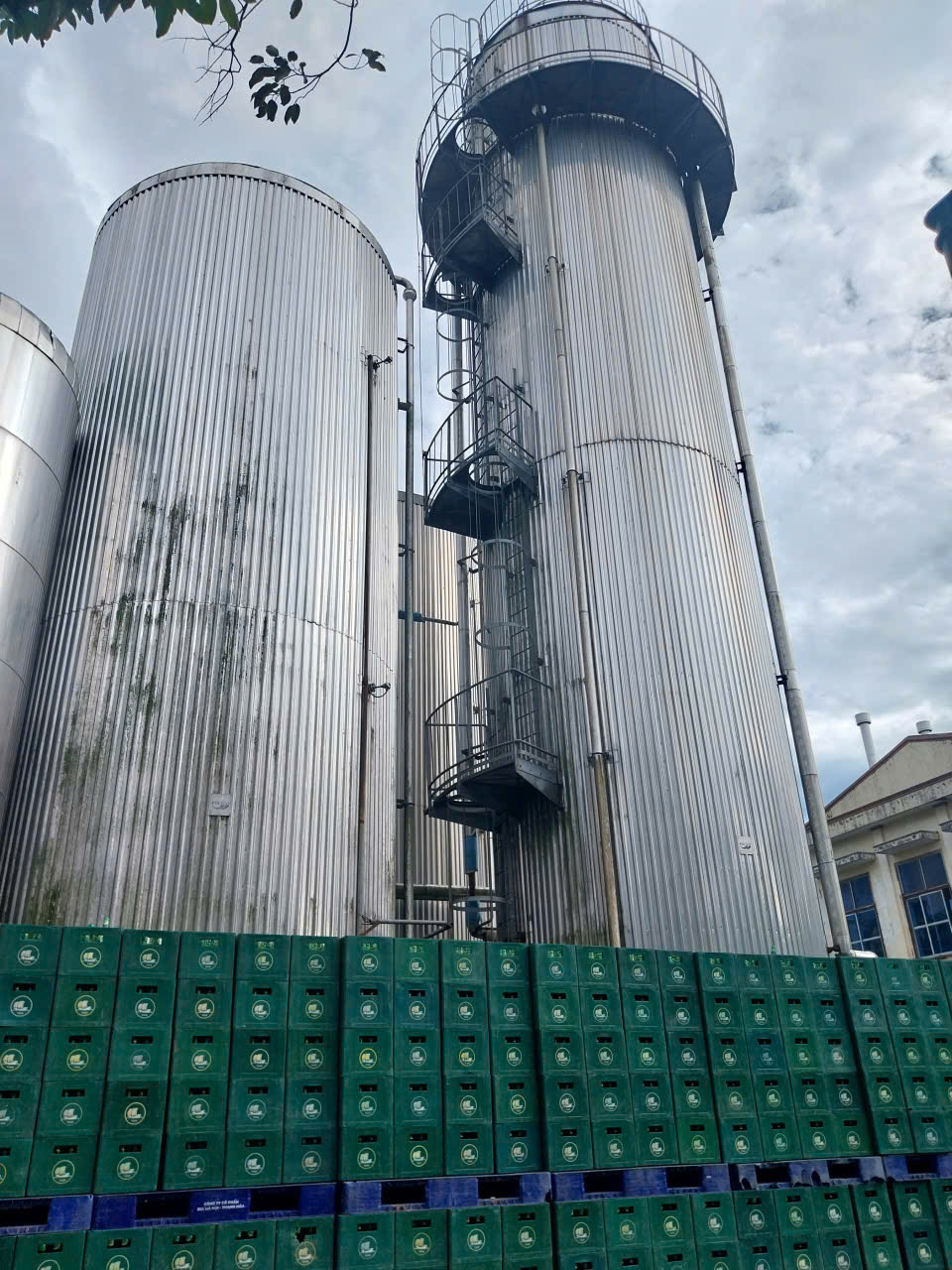
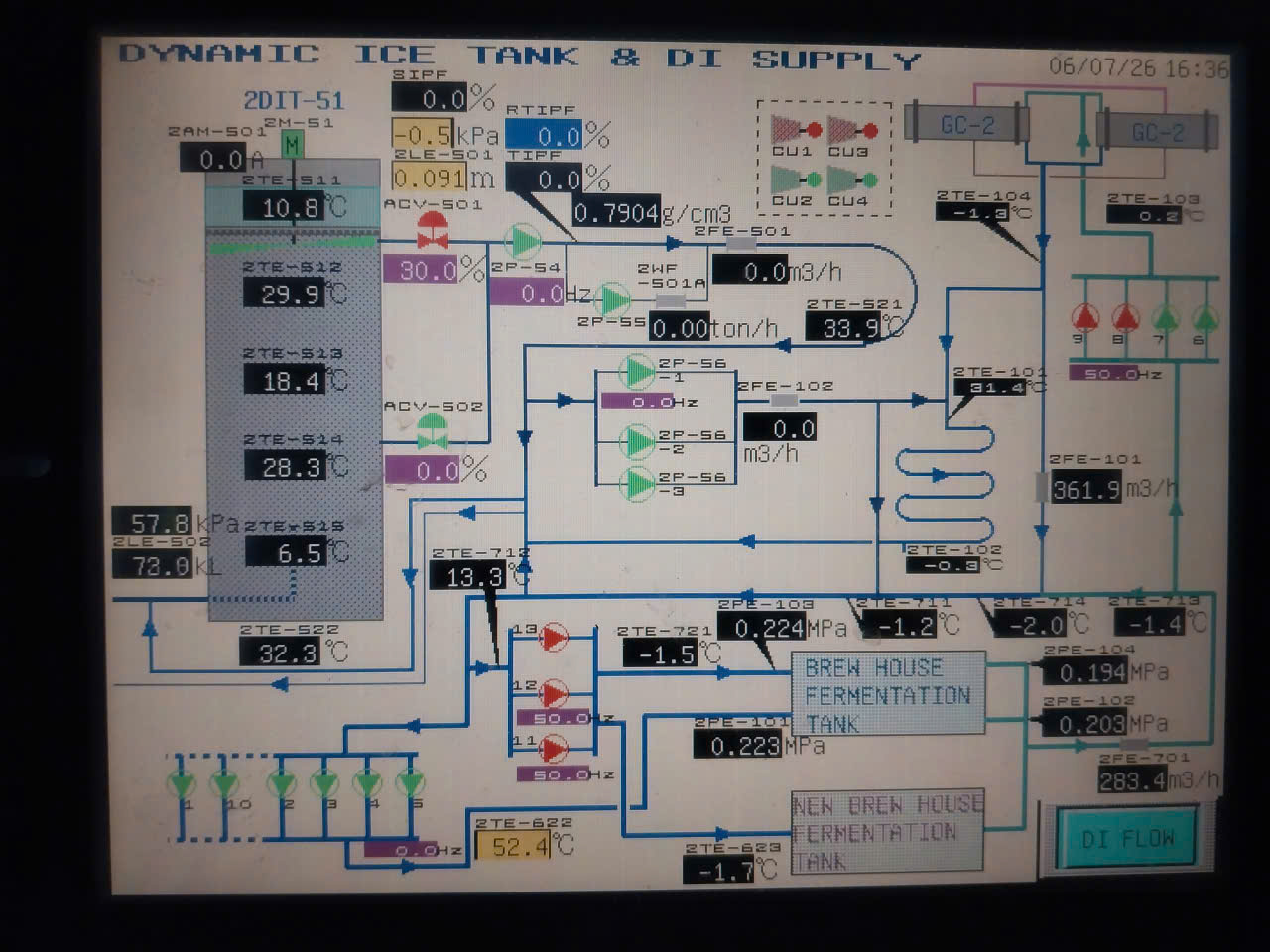
The automated refrigeration system stores 6°C chilled water in two storage tanks during off-peak hours for use during normal and peak electricity demand periods.
This two-stage cooling system reduces chilled water consumption per batch from approximately 42–45 m³ to 35–37 m³, representing savings of 16–18%. At the same time, the refrigeration system's cooling load during peak demand periods has been reduced by approximately 25–35%.
To implement this solution, the company converted an existing 200 m³ glycol storage tank into a chilled water storage tank and integrated it with an existing 140 m³ tank, providing sufficient chilled water capacity for continuous day-and-night production. The refrigeration system now operates primarily during off-peak electricity hours, between 10:00 p.m. and 4:00 a.m.
The company also made use of excess capacity within its existing refrigeration system by installing additional heat exchangers, pumps, control valves, and an automated control system integrated with PLC/SCADA, enabling optimized system operation. Beyond electricity savings, the system also recovers approximately 30–35 m³ of hot water at 92–94°C after each production batch. This recovered hot water is reused for CIP cleaning and brewing operations, further reducing steam consumption.
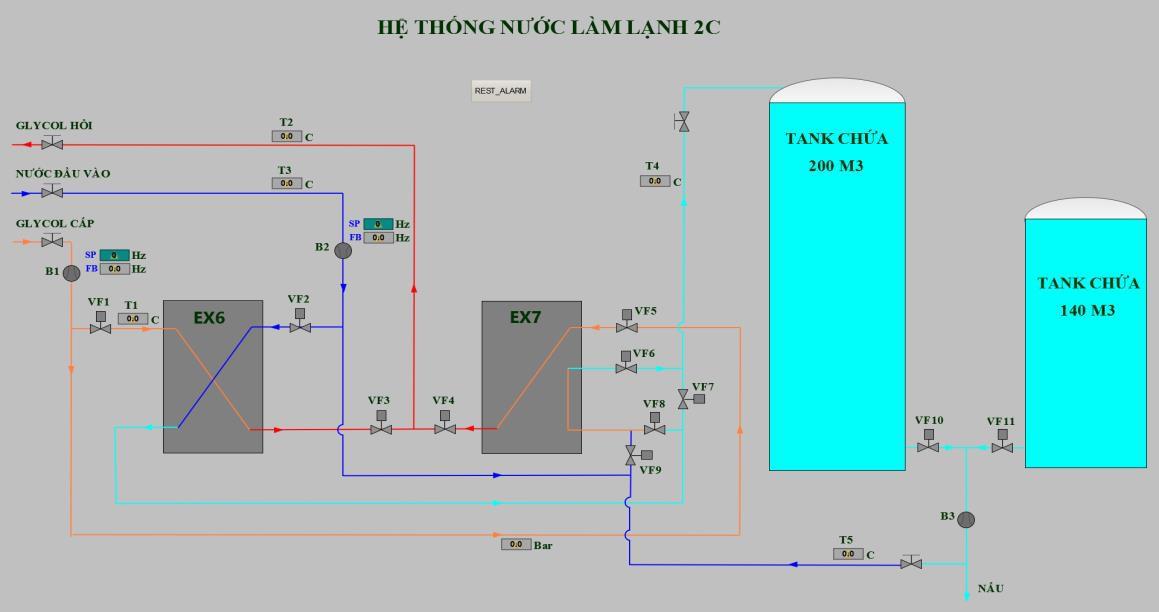
Diagram illustrating the connection of the 2°C water production system supplying chilled water to the 200 m³ storage tank during off-peak electricity tariff periods.
According to the company's calculations, replacing the conventional single-stage wort cooling system with the two-stage cooling process combined with chilled water storage generates annual electricity cost savings of approximately VND 660 million, based on an annual production volume of around 36 million liters of beer.
In addition to optimizing energy consumption, the company has implemented several initiatives to reduce emissions and promote circular production, including recovering biogas from its wastewater treatment system for boiler fuel, reducing boiler exhaust temperature and dust emissions, and improving refrigeration system efficiency to minimize waste heat released into the environment.
As the company continues expanding its market presence, Hanoi – Thanh Hoa Beer remains committed to improving energy performance through the adoption of new technologies and operational innovations. It also continues to strengthen employee awareness and encourage energy-saving practices throughout its production and business operations.
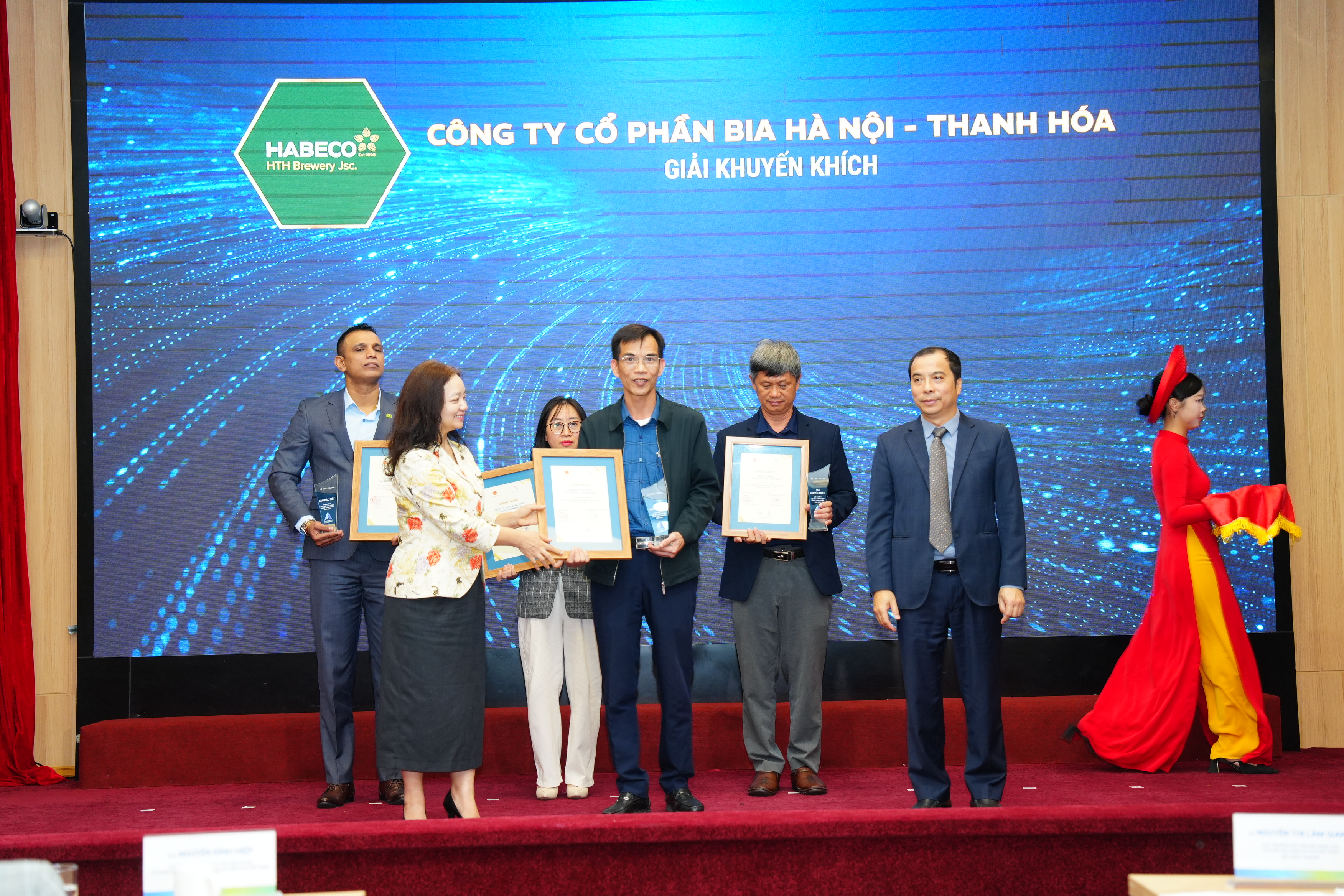
In recognition of its achievements in improving energy efficiency, Hanoi – Thanh Hoa Beer Joint Stock Company received the Encouragement Prize at the 2025 Industrial Energy Efficiency Awards, organized by the Ministry of Industry and Trade in collaboration with the Vietnam Energy Conservation and Energy Efficiency Association (VECEA).