Bosch Vietnam Optimizes Energy to Advance Sustainable Manufacturing
Thứ năm, 02/07/2026 - 15:07
The energy efficiency measures implemented by Bosch Vietnam Co., Ltd. helped the company save approximately VND 10 billion in 2025 through a combination of operational optimization, technology investment, and the digitalization of its energy management system.
As reducing emissions and improving energy efficiency become increasingly important priorities for the manufacturing sector, Bosch Vietnam has been implementing a wide range of technical and energy management solutions to enhance its energy performance. Guided by its philosophy of "Invented for Life," Bosch continuously innovates and integrates advanced technologies into its manufacturing processes. These efforts not only improve product quality but also contribute to environmental protection and a better quality of life. The company's energy-saving initiatives are not only aimed at reducing electricity consumption in manufacturing but also demonstrate Bosch Vietnam's and the Bosch Group's long-term commitment to sustainable development.
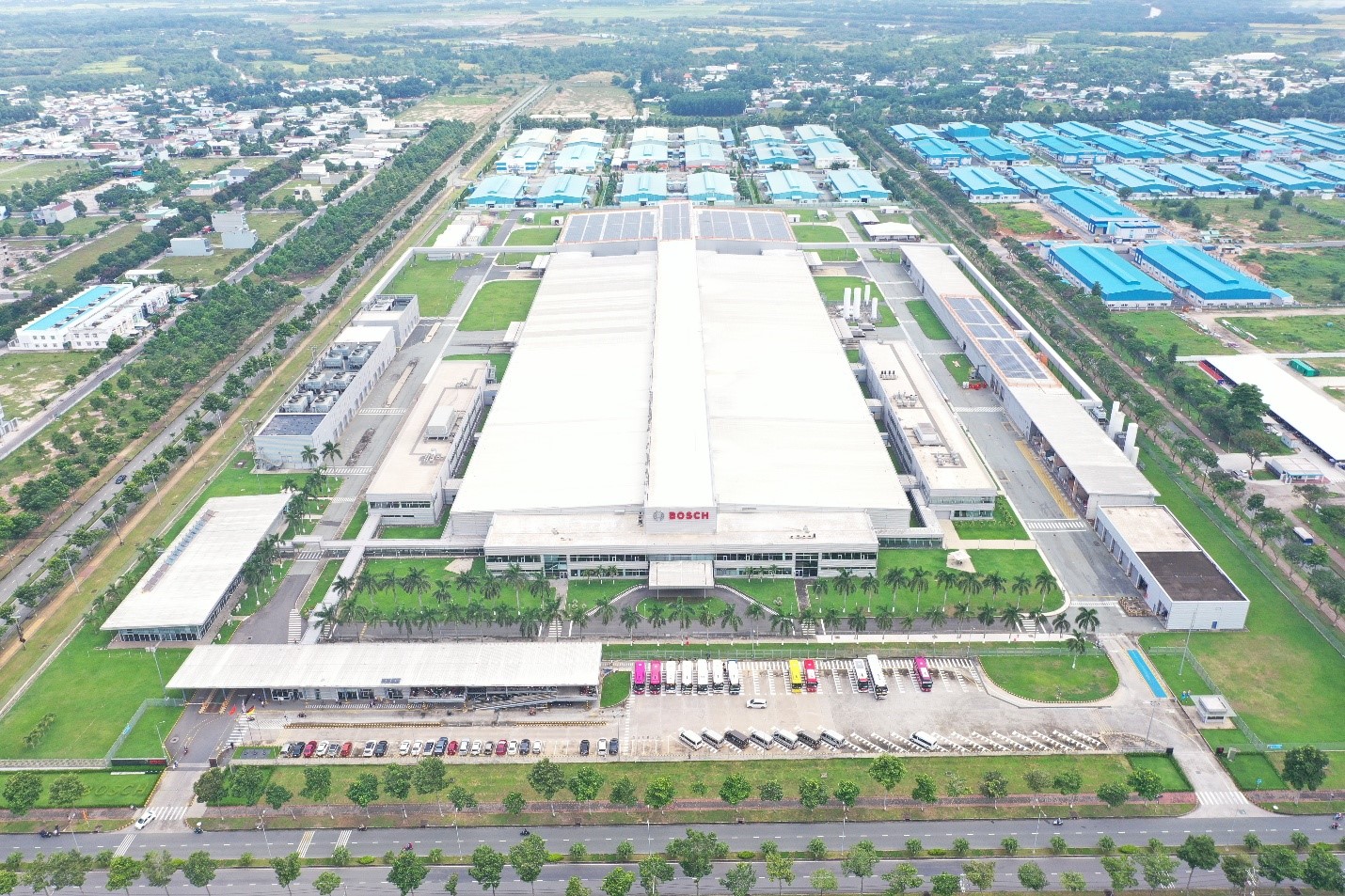
Bosch Vietnam's manufacturing plant in Long Thanh Industrial Park, Dong Nai Province.
Since 2019, Bosch Vietnam's manufacturing plant has intensified its energy efficiency initiatives by implementing solutions that optimize operating costs while maintaining production performance and operational reliability.
In addition to improving operational processes, the company has invested in various technologies to increase energy efficiency. One notable example is its 1,540-kWp rooftop solar photovoltaic system, commissioned in 2023, which generates approximately 1,646 MWh of electricity annually, equivalent to nearly 2% of the plant's total electricity consumption.
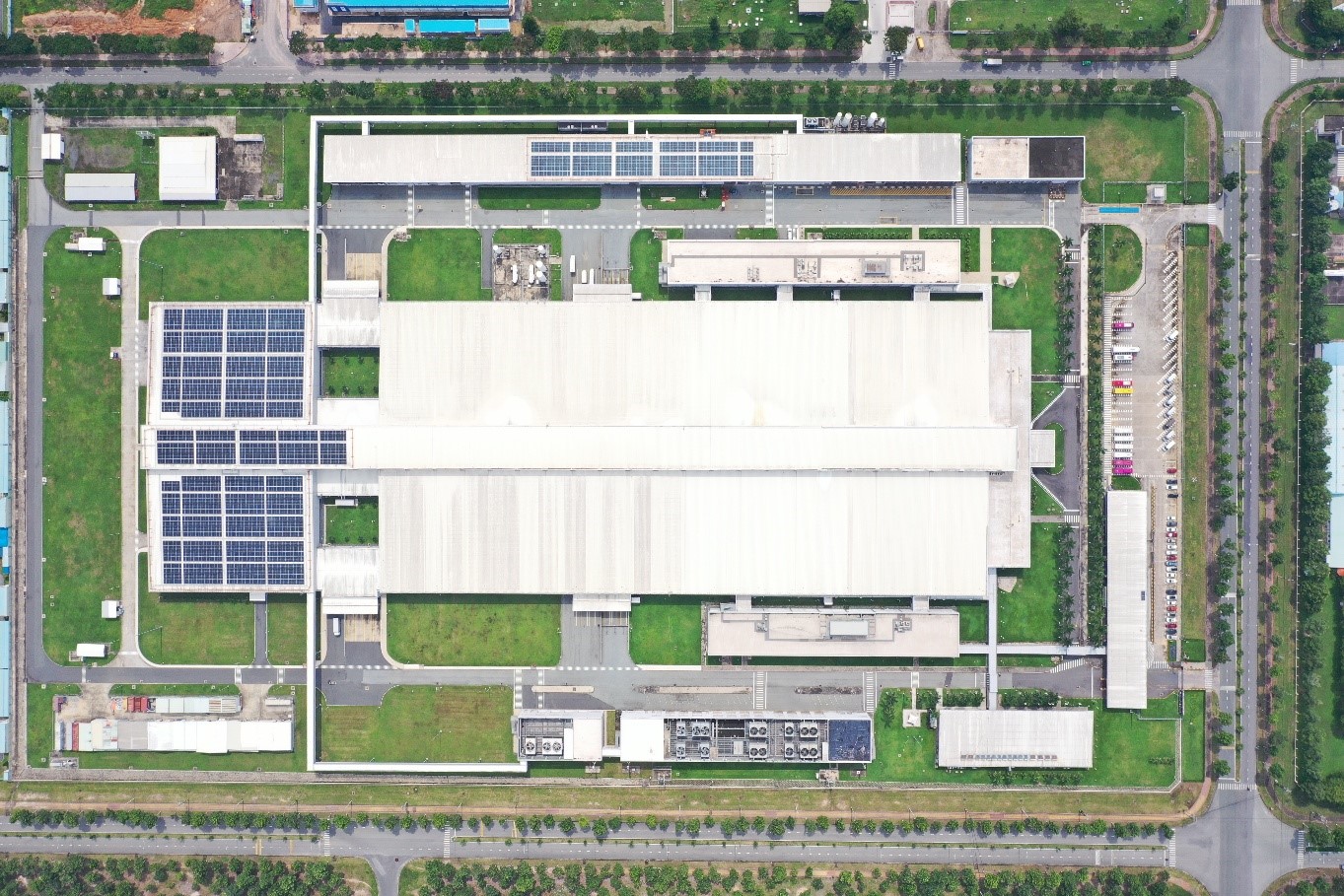
The rooftop solar power system at Bosch Vietnam's manufacturing plant.
Within its production facilities, Bosch Vietnam has focused on optimizing major energy-consuming systems, including compressed air, heat treatment, and cooling systems. The installation of a VSD air compressor at the gas station saves approximately 658 MWh of electricity each year, while a compressor heat recovery system captures waste heat for reuse in production processes. The plant has also reduced the standby temperature of annealing furnaces and optimized the use of LPG and propane in manufacturing processes, helping to reduce fuel consumption throughout the production line.
Significant savings have also been achieved through improvements to the air conditioning and cooling systems. Reducing the operating hours of chillers serving the Lth103 production area saves approximately 1,345 MWh annually, while optimizing chiller operation in the Lth105a area delivers an additional 1,079 MWh of annual electricity savings.
In addition, the plant has balanced the supply airflow of its air-conditioning system in the Lth101 workshop, optimized cooling tower operating parameters, and increased the chiller operating temperature from 5°C to 6.5°C, further reducing electricity consumption.
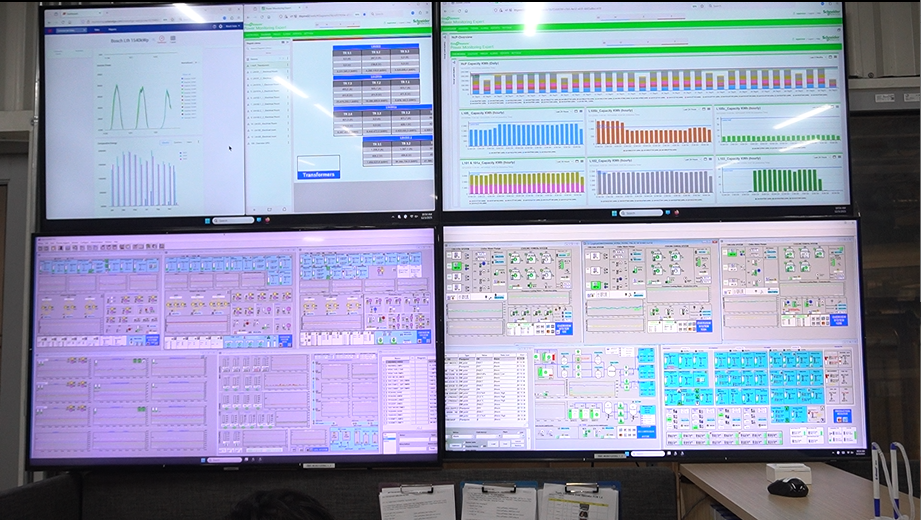
The plant operates both a Building Management System (BMS) and a Power Monitoring System (PMS).
Beyond technical improvements, Bosch Vietnam has invested in a digitalized, real-time energy management system. According to Mr. Luong The Tho, Head of Facility, Infrastructure & Equipment Management at Bosch Vietnam Co., Ltd., the plant simultaneously operates two systems: a Building Management System (BMS) and a Power Monitoring System (PMS).
The BMS controls and operates equipment according to actual demand, while the PMS continuously monitors energy consumption in real time. The integration of these two systems enables the plant to quickly identify areas with unusually high energy consumption and promptly optimize operations.
The combined use of the BMS and PMS has made energy management more transparent while ensuring compliance with Vietnamese regulations applicable to designated key energy users, as well as the Bosch Group's internal energy management standards.
"If only one of these systems were implemented, the expected energy-saving targets could not be fully achieved," Mr. Tho noted.

Mr. Luong The Tho, Head of Facility, Infrastructure & Equipment Management, Bosch Vietnam Co., Ltd.
In addition to its energy management infrastructure, Bosch Vietnam maintains close collaboration among its engineering, production, and maintenance teams to continuously identify new improvement opportunities. The plant operates both a Suggestion Scheme and a Continuous Improvement Process (CIP), encouraging employees to propose energy-saving initiatives and continuously improve operational performance.
Energy efficiency is also regularly promoted through internal newsletters, digital display screens in the cafeteria, and periodic management meetings.
Thanks to optimized operations, technical improvements, and a comprehensive energy management system, Bosch Vietnam has continued to improve its energy performance year after year. In 2025 alone, the company's energy efficiency initiatives generated cost savings of approximately VND 10 billion.
By integrating technical solutions, real-time energy monitoring systems, and a culture of continuous improvement, Bosch Vietnam is steadily optimizing energy efficiency across its manufacturing operations. As pressure to reduce industrial emissions continues to grow, the company's approach demonstrates that energy efficiency is no longer a collection of isolated measures, but an integral part of sustainable manufacturing and long-term business development.