Connecting the Energy Efficiency and Conservation Network
Thứ sáu, 26/06/2026 - 13:57
On the morning of June 25, 2026, the Hanoi Department of Industry and Trade, in collaboration with Innovation, Green Transition and Industrial Promotion Agency (Ministry of Industry and Trade) and the Vietnam Energy Conservation and Energy Efficiency Association (VECEA), organized the Energy Efficiency and Conservation Network Connection Workshop.
The workshop was held as part of the Hanoi International Exhibition on Energy and Environmental Technology 2026 (ENTECH HANOI 2026).
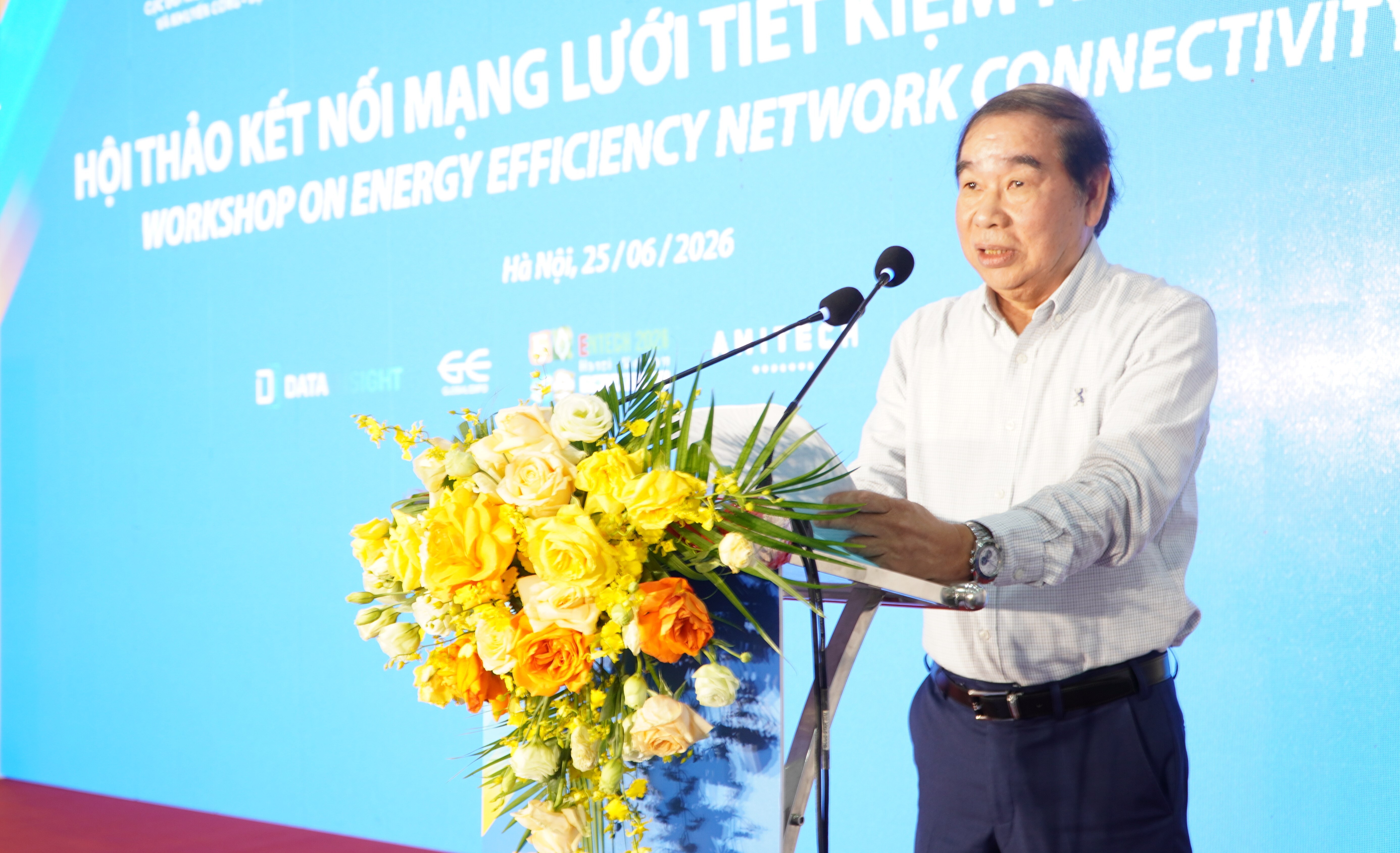
Mr. Nguyen Dinh Hiep, Chairman of the Vietnam Energy Conservation and Energy Efficiency Association, delivers the opening remarks.
In his opening speech, Mr. Nguyen Dinh Hiep, Chairman of VECEA, emphasized that energy efficiency and conservation is a practical solution for improving economic performance while conserving national energy resources, protecting the environment, and reducing greenhouse gas emissions, thereby contributing to global climate change mitigation efforts. According to assessments by the Ministry of Industry and Trade and Vietnam Electricity (EVN), ensuring a reliable electricity supply in the coming years will face increasing challenges, particularly under extreme weather conditions.
He stressed that building an energy efficiency network in Vietnam plays a vital role in ensuring national energy security, reducing the need for investment in new power generation capacity, and supporting the country's goal of achieving net-zero emissions by 2050.
"The Energy Efficiency Network Connection Workshop aims to strengthen the capacity of organizations and enterprises engaged in energy efficiency activities across localities, while helping establish a nationwide collaborative network of energy efficiency organizations," Mr. Hiep stated.
During the workshop, participants heard a presentation by Mr. Dao Hong Thai, Vice Chairman of VECEA, on the implementation results of the Vietnam National Energy Efficiency Programme 2019–2030 (VNEEP3).
Mr. Thai noted that Phase I of VNEEP3 had successfully achieved its key objectives, including: Reducing national total energy consumption by 5–7% during the 2019–2025 period; Improving policies, legal frameworks, and regulations on energy efficiency; Lowering the national electricity transmission and distribution loss rate to below 6.5%; Training and certifying 3,000 energy managers and energy auditors; Ensuring that 100% of designated key energy users implement energy management systems; Reducing average energy intensity across industrial sectors compared with the 2015–2018 baseline; Ensuring compliance with national technical regulations on energy-efficient buildings; Achieving 80 certified green buildings with high energy performance; Implementing market transformation programs for energy efficiency covering at least five widely used product categories; Enabling 70% of industrial parks and 50% of industrial clusters to access and adopt energy efficiency solutions.
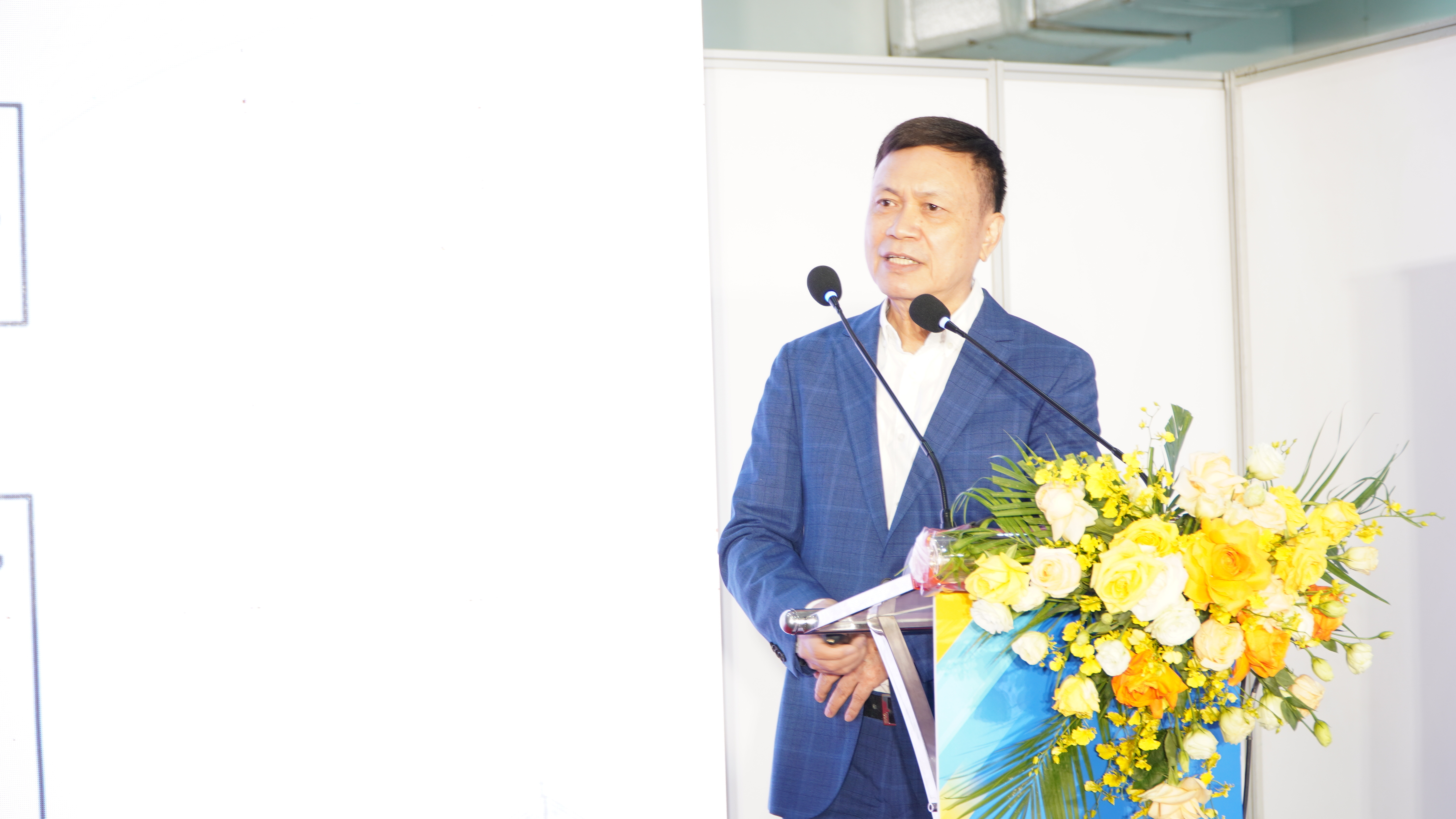
Mr. Dao Hong Thai, Vice Chairman of the Vietnam Energy Conservation and Energy Efficiency Association.
Sharing practical experience from the Energy Efficiency Club in Thai Nguyen Province, Mr. Nguyen Trong Hau, Head of Solution Consulting at Vietnam Technology Solutions Joint Stock Company, explained that Thai Nguyen is one of northern Vietnam's major industrial centers, hosting numerous designated key energy users across industries such as steel, mechanical engineering, building materials, and electronics. The club aims to facilitate the exchange of energy management experience, introduce new technologies, promote successful models, encourage renewable energy adoption, and reduce energy consumption and CO₂ emissions.
Its activities include technical seminars, expert roundtable discussions, site visits, sharing of best practices, and training programs for energy professionals. In particular, factory visits have enabled participating enterprises to learn from one another and replicate successful energy-saving solutions.
Key achievements of the Thai Nguyen Energy Efficiency Club include: Conducting in-depth energy audits for five member companies with the participation of Vietnamese and German experts; Assessing major energy-consuming systems such as steel rolling furnaces, compressed air systems, boilers, cooling water pumps, and dust collection systems; Identifying numerous energy-saving opportunities that can be implemented immediately at manufacturing facilities; Securing commitments from member companies to reduce total final energy consumption by an additional 2% by 2025; Enhancing enterprise capacity through training programs on ISO 50001, greenhouse gas inventory development, compressed air systems, electrical harmonics, and excess oxygen recovery in industrial furnaces.
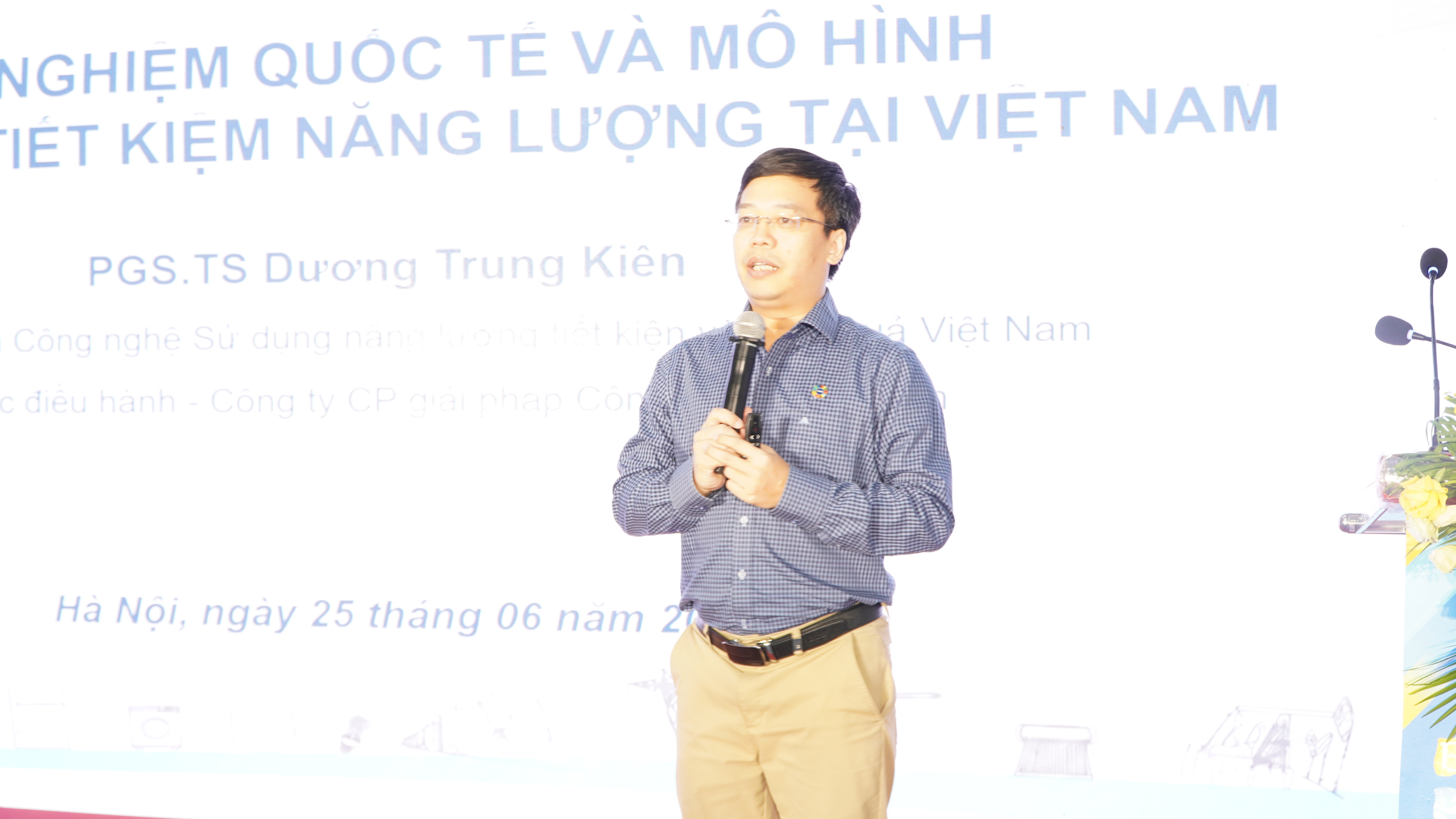
Associate Professor Dr. Duong Trung Kien, Chief Executive Officer of Vietnam Technology Solutions Joint Stock Company.
Presenting the concept of an Energy Efficiency Network in Vietnam, Associate Professor Dr. Duong Trung Kien, Chief Executive Officer of Vietnam Technology Solutions Joint Stock Company, explained that the network follows a continuous improvement cycle consisting of member recruitment, potential assessment, target setting, solution implementation, and replication.
According to Dr. Kien, successful energy efficiency networks share several common characteristics: a dedicated coordinating organization, qualified technical experts using standardized methodologies, measurable performance targets, tangible benefits for participating enterprises, and sustainable mechanisms that ensure continued operation beyond the initial support period.
He also emphasized that VNEEP has established an important foundation for energy efficiency activities in Vietnam by: Creating legal and policy frameworks at both national and local levels; Training energy managers and certified energy auditors; Developing a nationwide network of consulting firms, energy conservation centers, industrial promotion centers, and public service organizations; Promoting awareness campaigns, technical training, energy labeling, energy consumption benchmarks, and demonstration projects.
Dr. Kien further proposed that the Vietnam Energy Efficiency Network should: Connect enterprises to facilitate the exchange of experience, practical needs, and opportunities for implementing energy-saving solutions; Link businesses with consulting organizations, Energy Service Companies (ESCOs), equipment and technology suppliers, financial institutions, support funds, and international development partners; Develop a comprehensive energy efficiency service ecosystem capable of supporting enterprises from initial assessments through project implementation; Improve the quality of consulting services, energy audits, energy-efficient technologies, and products; Support the development of a pipeline of bankable, technically feasible energy efficiency projects; Contribute to Vietnam's national goals on energy conservation, greenhouse gas emission reduction, and sustainable development.
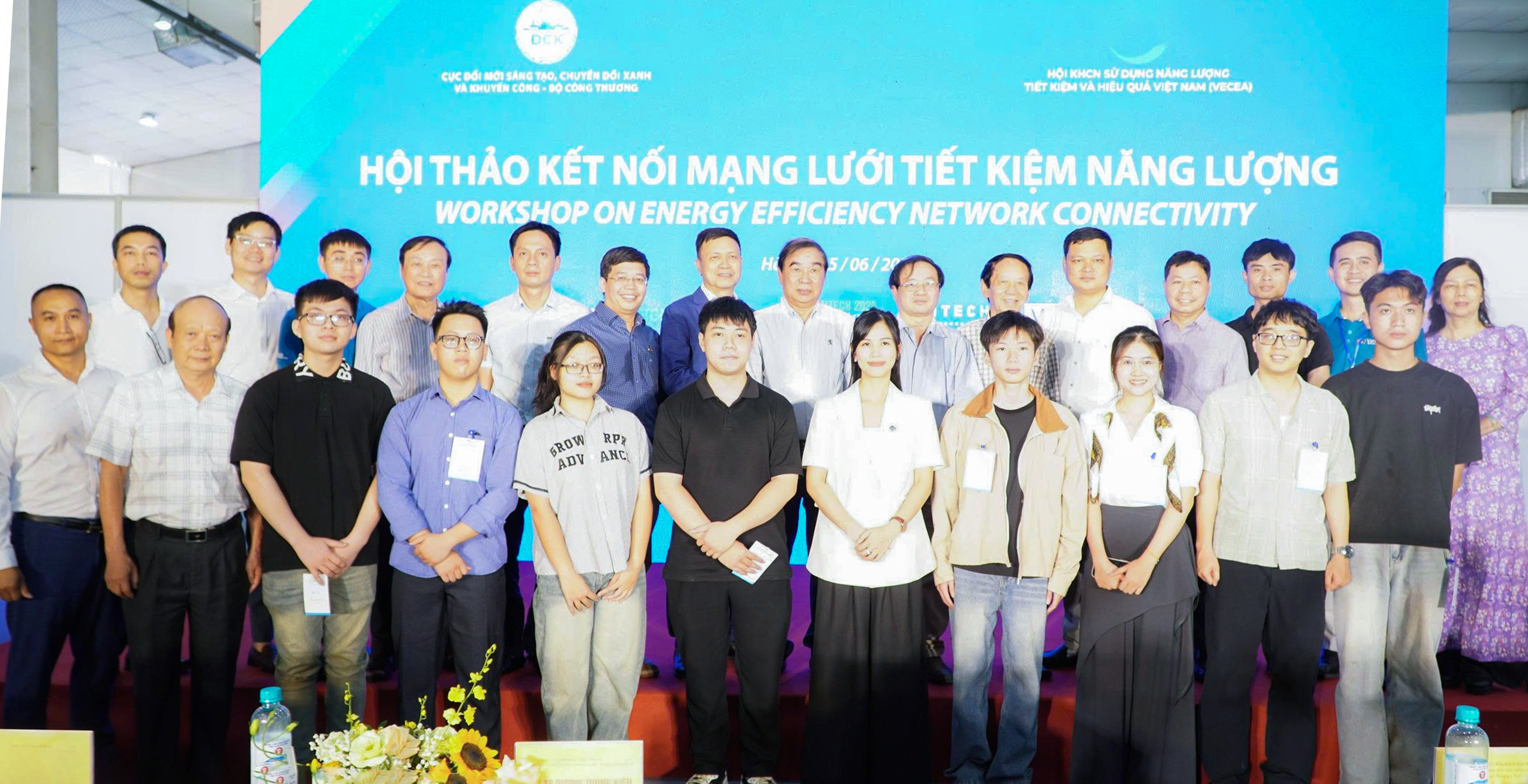
The workshop also included an interactive discussion session, during which participants exchanged views and raised questions regarding energy efficiency solutions and the role of energy efficiency networks. The recommendations and feedback provided by delegates are expected to further strengthen the implementation of energy efficiency initiatives across businesses and communities nationwide.