More Than 40,000 Energy-Labeled Products Available on the Market
Thứ sáu, 05/06/2026 - 14:06
Vietnam’s Energy Labeling and Minimum Energy Performance Standards Program was launched in 2011 voluntarily and became mandatory in 2013. After nearly 15 years of implementation, the program has brought about significant improvements in energy efficiency, contributing to the promotion of green consumption and sustainable development.
Promoting Green Consumption and Energy Efficiency
In 2026, geopolitical instability in the Middle East increased pressure on the global energy market, with crude oil prices at times exceeding USD 106 per barrel. Ensuring energy security to support socio-economic development and meet the daily needs of the population has become increasingly important.
Alongside the development of primary energy sources, energy efficiency and conservation have been identified as key solutions for improving economic performance. They also play an important role in preserving national energy resources, protecting the environment, reducing greenhouse gas emissions, and supporting commitments to address climate change.
One of the key measures promoted by the Ministry of Industry and Trade (MOIT) is the use of energy-labeled products and equipment, particularly those with high energy performance ratings.
Energy labels help consumers easily identify information on energy consumption, operating efficiency, and energy-saving capabilities, enabling them to select quality products that are energy-efficient and environmentally friendly.
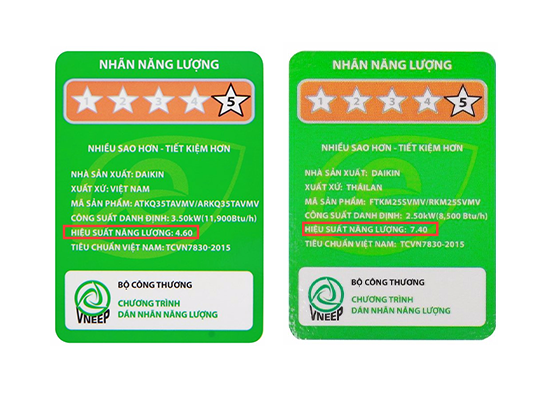
When products carry the same star rating, consumers can compare their energy efficiency values to choose the most electricity-efficient option.
In addition to helping consumers reduce monthly electricity expenses, energy labels have encouraged a shift toward purchasing greener, more technologically advanced, and energy-efficient products. For manufacturers, the program has also created incentives to innovate technologies and improve production processes, thereby enhancing product competitiveness in the market.
Energy Labeling: Effective Implementation and a Clear Roadmap
As part of Vietnam’s Energy Labeling and Minimum Energy Performance Standards Program for energy-consuming equipment and vehicles, the Ministry of Industry and Trade has implemented energy labeling for nearly 30 product categories listed under Decision No. 04/2017/QD-TTg issued by the Prime Minister. These products cover household, office, and industrial equipment. To date, more than 40,000 products on the Vietnamese market have been granted energy labels.
Between 2019 and 2025, the Ministry received approximately 1,600–2,000 energy-label registration dossiers annually from businesses. Statistics show that after nearly 15 years of implementation, nearly 95% of energy-consuming products, vehicles, and equipment in the household, commercial, and industrial sectors have been energy-labeled.
The program has also delivered significant results in market transformation and improved the energy performance of commonly used electrical appliances. In the lighting sector, annual LED lamp consumption in Vietnam has reached between 180 million and more than 210 million units. Market transformation initiatives are estimated to have eliminated approximately 90 million incandescent bulbs above 60W, equivalent to 45% of the market volume. The corresponding electricity savings amount to approximately 4,500 MW of installed capacity, equivalent to 4.5 billion kWh of electricity per year.
At the same time, the energy efficiency of six major electricity-consuming product groups—including transformers, air conditioners, rice cookers, electric fans, fluorescent tube lamps, and compact fluorescent lamps (CFLs)—has improved significantly.
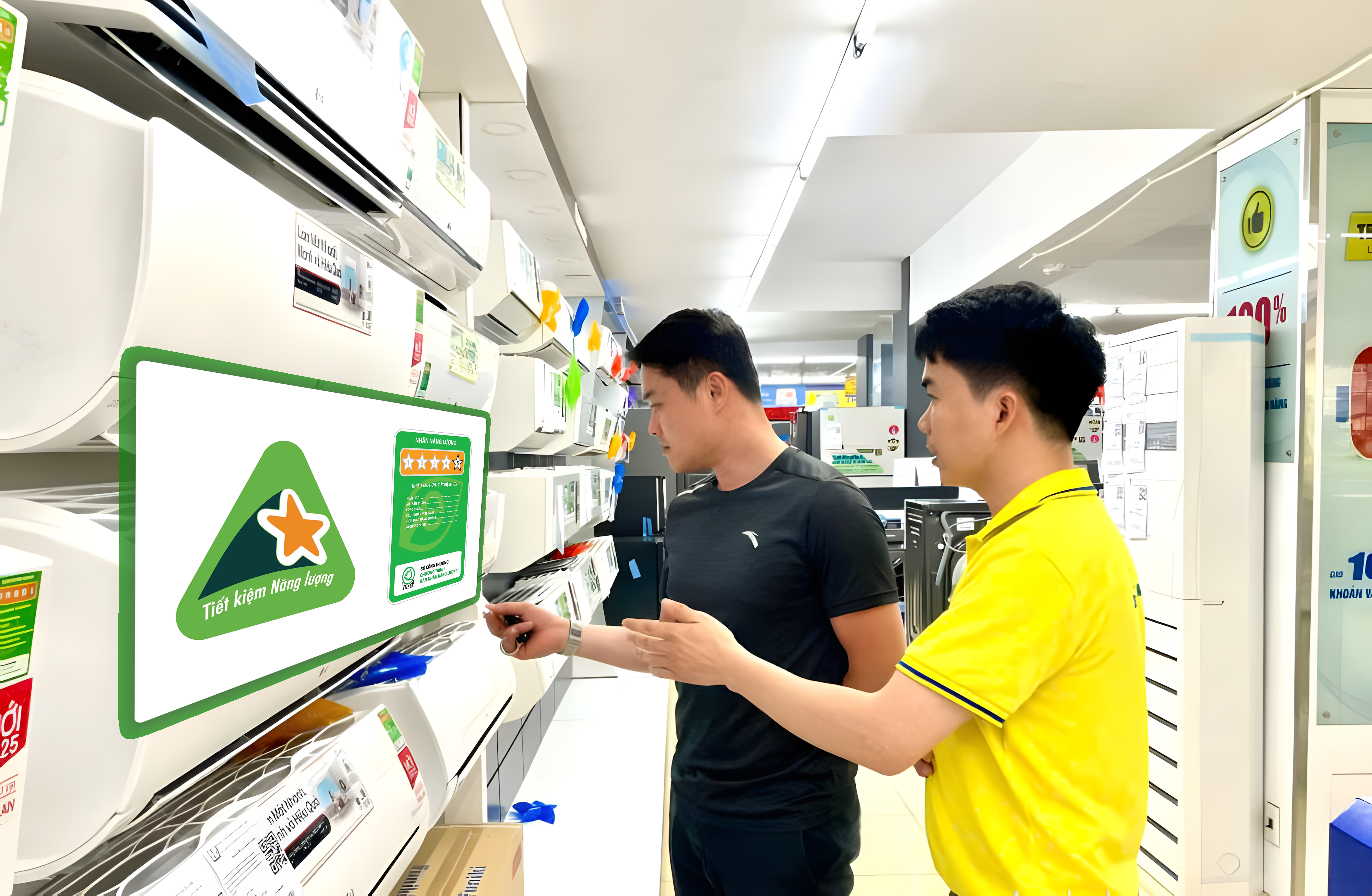
Consumers are increasingly interested in products with high energy performance.
For air conditioners alone, approximately 600 models were registered for energy labeling with the Ministry of Industry and Trade between 2020 and 2025, while the residential air-conditioning market reached approximately 2.1 million units annually. Non-inverter air conditioners were mainly rated in the 1- to 3-star categories, whereas inverter models were concentrated in the 4- and 5-star categories and accounted for approximately 80% of market share.
Notably, the upgrade of air-conditioner energy performance standards from TCVN 7830:2015 to TCVN 7830:2021 increased the Cooling Seasonal Performance Factor (CSPF) of 4-star and 5-star products by approximately 25–29% compared to previous requirements. The new standard became mandatory in April 2025 and is estimated to deliver electricity savings ranging from 7.79 TWh to 20.79 TWh, equivalent to approximately 3–8% of Vietnam’s total electricity consumption in 2021.
According to energy experts, raising energy efficiency standards not only encourages technological innovation among manufacturers but also gradually removes inefficient, energy-intensive products from the market. This is consistent with international trends toward building green economies and achieving sustainable development.
To meet the testing needs of businesses, Vietnam currently has 12 accredited laboratories authorized to test the energy performance of energy-consuming equipment and vehicles. These include two laboratories for air conditioners and refrigerators in the northern and southern regions, three laboratories for boilers, and three laboratories for electric motors.
The Ministry of Industry and Trade is also expanding the energy-labeling roadmap by adding six new product groups: microwave ovens, induction cookers, infrared cookers, LED street lighting products, desktop computers, and commercial air-conditioning systems. Expanding the scope of energy labeling not only helps raise public awareness of energy efficiency and conservation but also encourages businesses to adopt new technologies and strengthen their competitiveness.
As energy demand continues to rise and pressure to reduce emissions increases, the Energy Labeling Program is expected to continue playing a crucial role in Vietnam’s energy transition, contributing to the development of a green, modern, and sustainable economy.
Types of Energy Labels in Vietnam 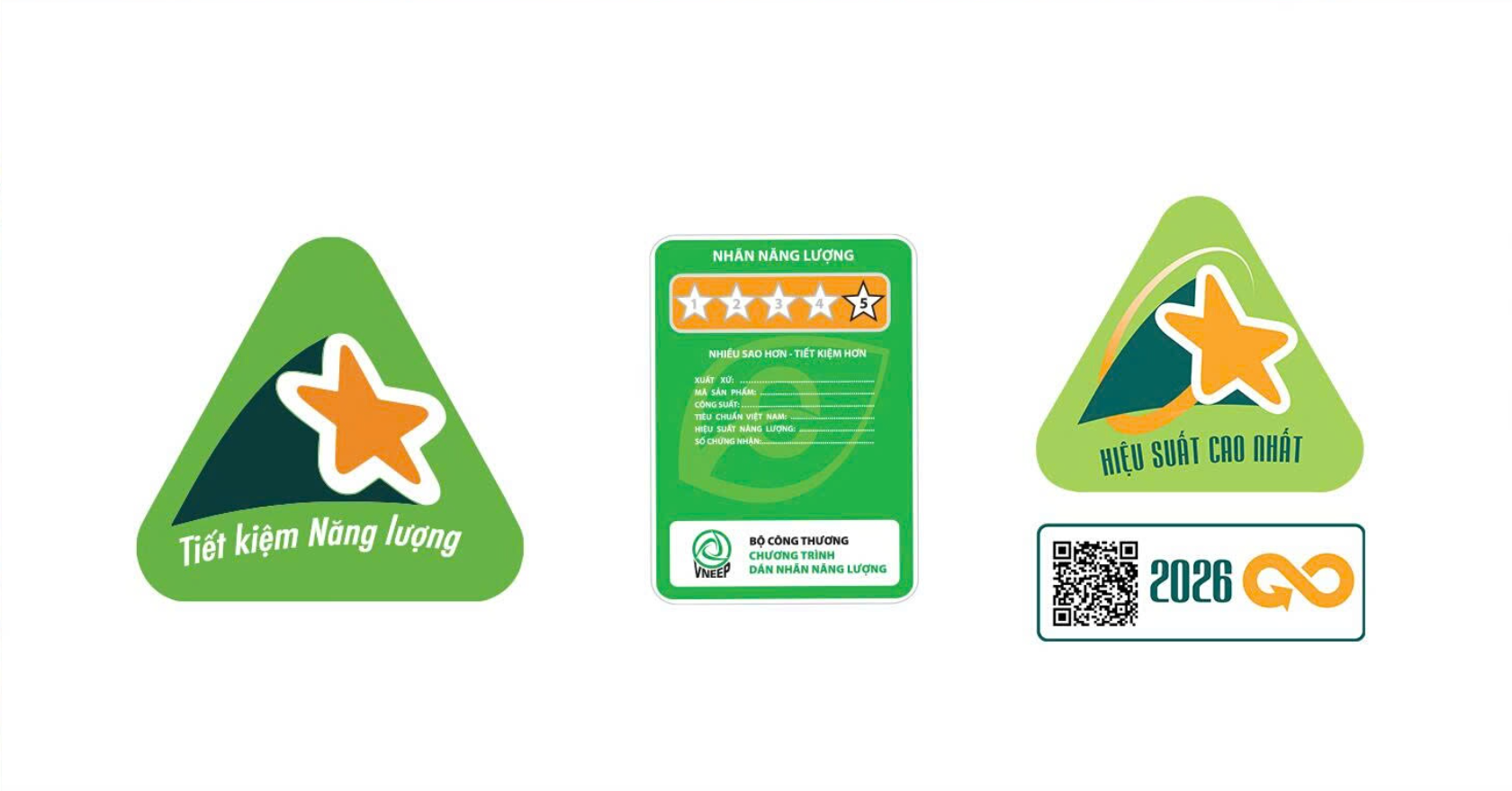 The Endorsement Label is awarded to products and equipment whose energy performance meets or exceeds the energy-saving performance threshold or the High Energy Performance Standards (HEPS) established by the Ministry of Industry and Trade for each period. The label is represented by the “Energy Saving” symbol, also known as the Vietnam Energy Star. The Comparative Energy Label is applied to products and equipment available on the market with different energy performance levels, rated on a five-star scale (from 1 star to 5 stars). Consumers can use the star rating to select products with the highest efficiency suitable for their needs. A 5-star rating indicates the highest energy performance level. The comparative label includes information such as: Manufacturer; Product name/model; Registration code; Other product-specific information (which may include applicable Vietnamese standards, power rating, origin, energy performance, etc.); Energy efficiency rating (from 1 star to 5 stars), determined by the Ministry of Industry and Trade based on testing and evaluation of the product’s electricity consumption performance. The Highest Energy Performance Label is a voluntary energy label introduced in 2020 through the “Highest Energy Performance Product Award” program. This label is awarded to products and equipment with the highest energy performance available on the market. It helps consumers identify products with outstanding energy-saving capabilities, exceeding the 5-star level defined under Vietnamese Standards. |