The Law on Energy Efficiency and Conservation Officially Takes Effect from 1 January 2026
Thứ năm, 08/01/2026 - 13:40
The Amended Law on Energy Efficiency and Conservation (Law No. 77/2025/QH15) was passed by the National Assembly on 18 June 2025 at the 9th Session of the 15th National Assembly and will take effect from 1 January 2026.
The Law amending and supplementing several articles of the Law on Using Energy Efficiency and Conservation aims to institutionalize the Party’s guidelines on energy efficiency, address shortcomings and obstacles in the current law, ensure consistency and coherence of the legal system, and align with the current domestic and international context, as well as international commitments to which Viet Nam is a party. At the same time, it strengthens the effectiveness and efficiency of state management, creates a favorable legal framework to encourage and promote energy efficiency activities, and mobilizes and attracts domestic and international resources to support and promote investment in energy efficiency and the transformation of the energy-efficient products market.
The Law amending and supplementing several articles of the Law on Energy Efficiency and Conservation inherits the provisions set out in 12 Chapters and 48 Articles of the Law on Using Energy Efficiency and Conservation promulgated in 2010. At the same time, the amended Law revises 19 Articles and adds 1 new Article.
The content of the Law amending and supplementing several articles of the Law on Using Energy Efficiency and Conservation is concise and structured into 3 Articles, including: Article 1: Amendments and supplements to the Law on Using Energy Efficiency and Conservation; Article 2: Effectiveness; Article 3: Transitional provisions.
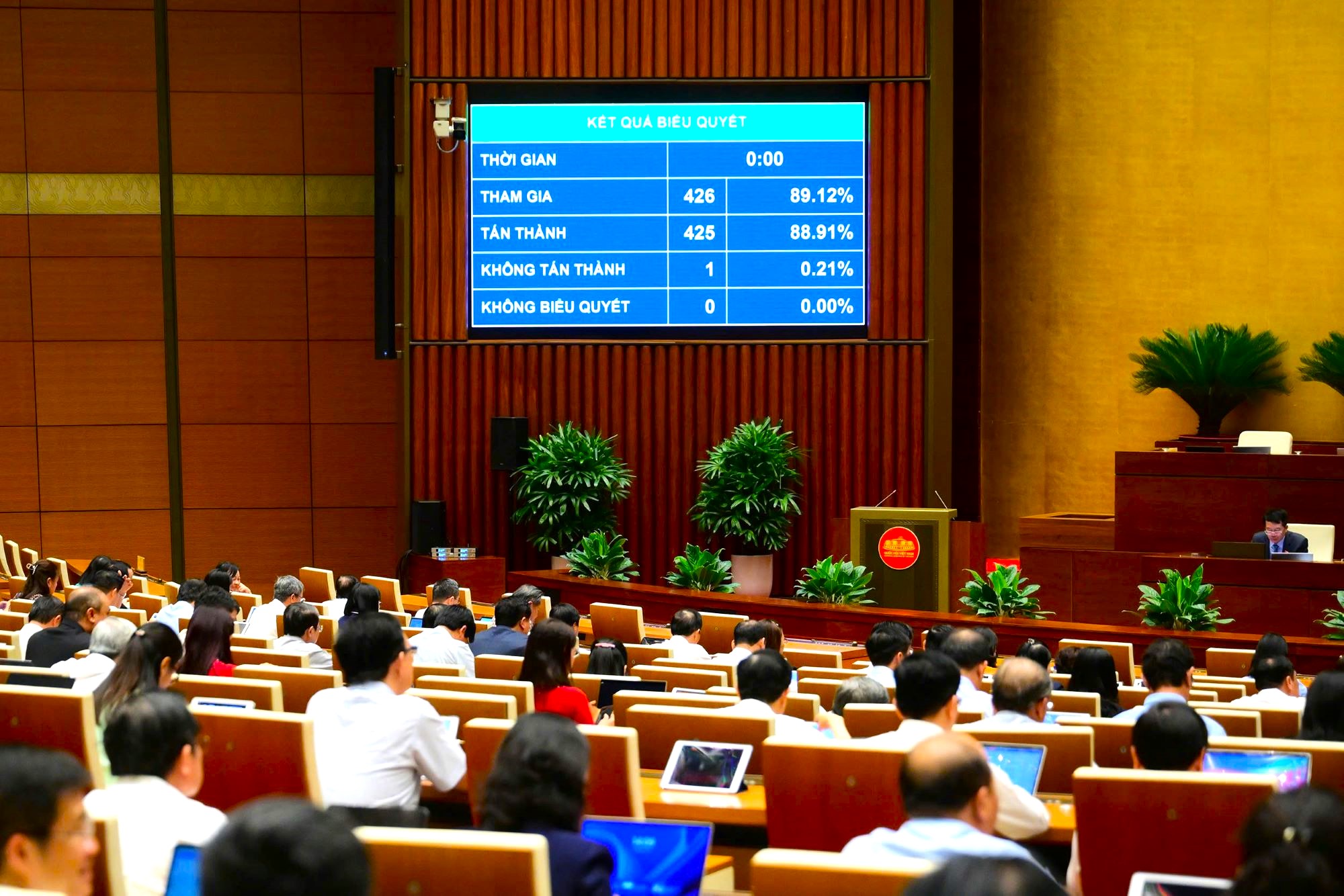
On 18 June 2025, the National Assembly voted to pass the Law amending and supplementing several articles of the Law on Energy Efficiency and Conservation.
The notable new provisions of the Law amending and supplementing several articles of the Law on Using Energy Efficiency and Conservation are reflected in four main policy groups, as follows:
Enhancing the Effectiveness of State Management in the Field of Energy Efficiency
- The Law strengthens the responsibilities of local authorities in managing and inspecting compliance with energy standards, technical regulations, and energy consumption norms of enterprises within their jurisdictions, as well as in developing annual and five-year energy efficiency plans. At the same time, it requires monitoring, supervision, and oversight of the implementation of local plans and compliance with regulations on energy efficiency.
- Maximum simplification of administrative procedures, including the reduction of procedures for the issuance of energy labeling certificates and energy audit certificates.
- Assigning the Ministry of Construction to promulgate energy consumption norms in the industrial production of construction materials under its management scope.
Strengthening the Management and Development of Energy Consulting Services, Energy Audits, and Human Resource Training in Energy Efficiency
- Improving the legal framework and establishing support and incentive mechanisms to form a system of energy consulting organizations and services (ESCOs). Energy service organizations and companies are required to register or declare their operations with competent state management authorities.
- Improving the quality of human resources in energy efficiency by stipulating training contents and programs, and the issuance of certificates for energy auditors and energy managers.
- Adding specific provisions on the validity period of energy auditor certificates and energy manager certificates, and stipulating business conditions for the energy audit sector to ensure service quality.
- Public disclosure of the list of organizations and individuals operating in the field of energy services, as well as publication of organizations and individuals that violate regulations on energy efficiency on the information portals of management authorities.
Strengthening Incentive Policies and Financial Support Instruments for Energy Efficiency
- Supplementing provisions on the establishment of a Fund for Promoting Energy Efficiency under a socialized model, ensuring financial independence and avoiding overlap with state budget revenue sources and expenditure tasks.
- The Law also supplements and clarifies financial support provisions for investments in energy efficiency solutions, including projects for upgrading and retrofitting production lines and expanding production capacity using energy-efficient technologies. At the same time, it expands tax and land incentives for the construction of production facilities for organizations and individuals investing in the development of energy-efficient products.
Market Transformation and Performance Management of Energy-Using Vehicles and Equipment
- Supplementing and clarifying mandatory energy labeling requirements for construction materials.
- Updating minimum energy performance standards and norms, moving toward the elimination of obsolete equipment, and encouraging the production and consumption of high-efficiency, environmentally friendly vehicles and equipment.
Innovation, Green Transition, and Industry Promotion Agency (Ministry of Industry and Trade)